SproutSmart
SproutSmart Intelligent Garden Sowing

Moonlight Nasturtium

Nasturtium
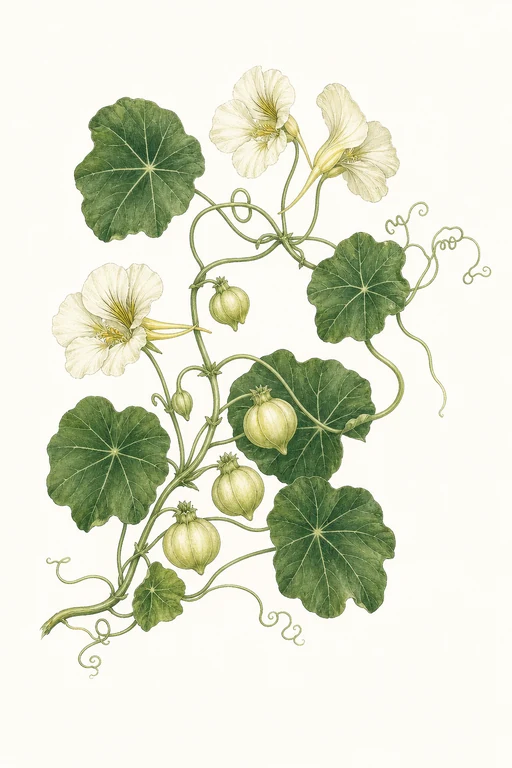
Botanical illustration of Moonlight Nasturtium
🌱 50d to harvest Vine

Moonlight Nasturtium spills over the garden with a cool, luminous presence—delicate blossoms in pale, creamy tones that feel like…

Planting Schedule

Add Moonlight Nasturtium to your garden to build a schedule and get reminders.

Crop Dates

MilestoneDate
Start IndoorsDirect Sow
Last FrostJan 1st
Transplant / Sow OutdoorsJan 1st
Harvest BeginsFeb 20th
Harvest Ends

Crop Details

TraitValue
Days to Maturity50
Sun RequirementsFull SunFull sun
Growth HabitVine
Support NeededTrellis
Planting DepthNormal
Germination Temp (°F)70
Min Soil Temp (°F)55
Min Night Temp (°F)40
Harden Off (days)Not Required

Frequently Asked Questions


What’s the most common disease pest issue for Tropaeolum majus (moonlight nasturtium), and how can I prevent it?
Nasturtiums are frequently affected by aphids and sometimes bacterial leaf spot under warm, humid conditions. Spray plants with a strong jet of water to knock off aphids, then use insecticidal soap if they persist, and remove badly spotted leaves to keep airflow high. Water at the soil line (not on foliage) to reduce disease spread, and avoid crowding so leaves dry quickly after rain or irrigation.
How often should I water Tropaeolum majus during the main growing phase?
During active flowering and growth (roughly weeks after seedlings establish), keep the soil evenly moist but not soggy—water when the top 1 inch of soil feels dry. In hot weather, this may be about 1–2 times per week depending on your soil, while in cooler periods you’ll likely water less. Avoid frequent light watering; nasturtiums do best with deeper soakings followed by drying of the top layer.
How can I tell when moonlight nasturtium (Tropaeolum majus) is ready to harvest?
Harvest is typically ready around 50 days from sowing when plants have abundant open flowers and the foliage is lush and healthy. For flowers, pick blooms as soon as they open fully—regular harvesting encourages more flowering. If you’re harvesting seeds, wait until seed pods turn greenish-brown and rattle slightly when dry, then collect them before they fully scatter.
Botanical illustration of Moonlight Nasturtium

Moonlight Nasturtium spills over the garden with a cool, luminous presence—delicate blossoms in pale, creamy tones that feel like moonlight caught on the vine. The tender leaves and succulent, peppery seed pods bring a crisp, juicy bite with a gentle heat, ideal for bright garnishes and quick pickling. Grow it for a long season of trailing color and a harvest that’s as lively in flavor as it is in form.

Sowing Tips

Transplant Conditions

Wait until soil reaches 55°F and nights stay above 40°F before moving outdoors.

Expert Note

Sow directly after the last frost (or in warm pockets earlier), since nasturtium roots dislike transplanting and plants flower best in full sun.