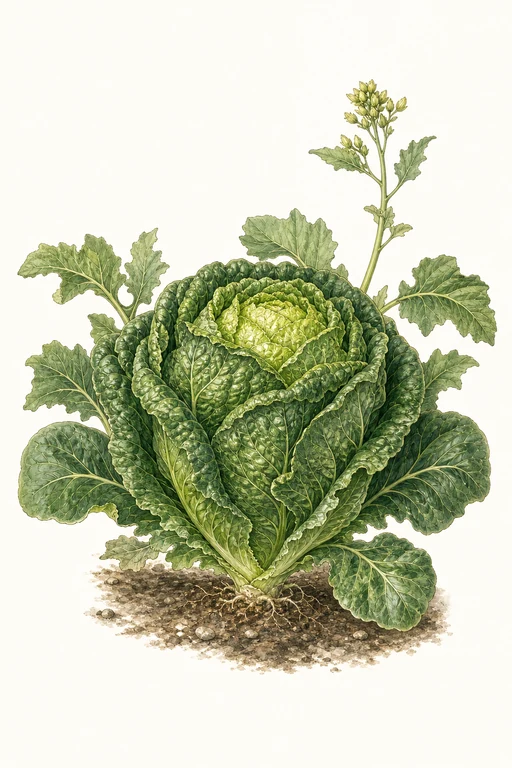
Saharan
75d to harvest
Crisp as fresh-cut snow, Saharan delivers a dense crisphead with a cool, clean crunch and a gently sweet, green flavor. Its tightly layered leaves form a satisfying, spoonable texture—sturdy enough to hold its bite while staying tender at the core. Grow Saharan for standout salads and elegant platters, or for refreshing wraps and bright, leafy garnishes that stay crisp through serving.
Crop Dates
Growing note: In frost-free Zone 13a, grow this cool-season crop during the cooler dry season (October–February).
| Milestone | Date |
|---|---|
| Start Indoors | — |
| Climate | Frost-Free Climate |
| Transplant / Sow Outdoors | Oct 1st |
| Harvest Begins | Dec 15th |
| Harvest Ends | Feb 28th |
Crop Details
| Trait | Value |
|---|---|
| Days to Maturity | 75 |
| Sun Requirements | Part Sun |
| Growth Habit | Rosette |
| Support Needed | None |
| Planting Depth | Surface |
| Germination Temp (°F) | 70 |
| Min Soil Temp (°F) | 40 |
| Min Night Temp (°F) | 35 |
| Harden Off (days) | 6 |
Recommended Companions
Frequently Asked Questions
What pest or disease most often affects Lactuca sativa (iceberg-type lettuce) and how do I manage it?
Look for aphids and slugs/snails on iceberg lettuce, especially in warm, humid stretches. Spray aphids off with a strong stream of water and use insecticidal soap if they persist, and hand-pick slugs at dusk or set beer traps/diatomaceous barrier around plants. Also watch for downy mildew and botrytis (gray mold) in cool, damp weather—improve airflow by spacing heads properly and water at the soil line, not the leaves.
How often should I water Lactuca sativa during the main growing phase (from transplanting until head set)?
Keep the soil evenly moist but not waterlogged while the plants are forming leaves and tightening into heads—typically about 1 inch (2.5 cm) of water per week, adjusted for heat and wind. Water deeply 1–2 times per week rather than daily misting, and aim for consistently damp soil 1–2 inches down. If the soil swings from dry to wet, iceberg lettuce is more likely to become bitter and develop loose or poorly formed heads.