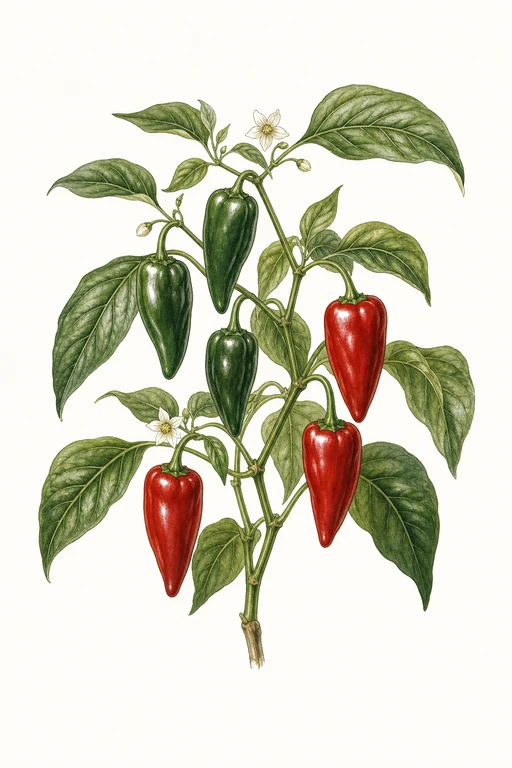
San Luis
75d to harvest
Aromatic and richly sweet, San Luis poblano peppers unfold with a velvety, deep-green skin that turns to a warm, glossy red as they mature—fragrant enough to perfume the garden. The fruits are medium-large and gently tapered, with thick, crisp flesh and a pleasantly mild, full-bodied flavor that shines in fresh salads, roasted applications, and vibrant sauces. Grow San Luis for dependable, 75-day harvests and a pepper that delivers both substance and a clean, sweet finish.
Crop Dates
Growing note: Frost-free Zone 13a supports continuous outdoor production.
| Milestone | Date |
|---|---|
| Climate | Frost-Free Climate |
| Growing Approach | Continuous Production |
Crop Details
| Trait | Value |
|---|---|
| Days to Maturity | 75 |
| Sun Requirements | Full Sun |
| Growth Habit | Bush |
| Support Needed | Stake |
| Planting Depth | Normal |
| Germination Temp (°F) | 75 |
| Min Soil Temp (°F) | 60 |
| Min Night Temp (°F) | 50 |
| Harden Off (days) | 10 |
Recommended Companions
Frequently Asked Questions
What disease is most common on Capsicum annuum (poblano-type “San Luis”) and how do I manage it?
A common issue is blossom-end rot and related calcium deficiency, often triggered by irregular watering during fruit set. Keep soil evenly moist from flowering through fruit development and avoid letting the soil swing between dry and soggy; mulch helps stabilize moisture. If you see dark, sunken ends, remove affected fruits and focus on consistent irrigation rather than adding lots of nitrogen.
How can I tell when San Luis peppers are ready to harvest?
Harvest at about 75 days after transplanting when pods have reached full size and a glossy green color; for a more mature flavor, allow them to turn red on the plant. Gently lift or snip the stem—don’t yank, which can damage the plant. If fruit is still small or looks wrinkled, give it more time and maintain steady moisture.