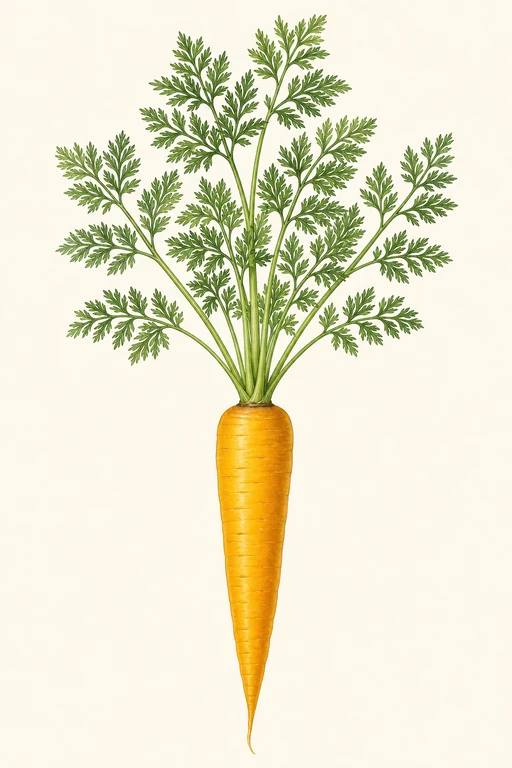
Amarillo Carrot
Carrot
🌱 75d to harvest
Rosette
Sunlit and silky, Amarillo Carrot delivers a bright golden-orange sweetness with a tender, crisp bite that stays pleasantly fine …
Crop Dates
| Milestone | Date |
|---|---|
| Start Indoors | Direct Sow |
| Last Frost | Jun 15th |
| Transplant / Sow Outdoors | Jun 15th |
| Harvest Begins | Aug 29th |
| Harvest Ends | Jul 15th |
Crop Details
| Trait | Value |
|---|---|
| Days to Maturity | 75 |
| Sun Requirements | Full Sun |
| Growth Habit | Rosette |
| Support Needed | None |
| Planting Depth | Surface |
| Germination Temp (°F) | 60 |
| Min Soil Temp (°F) | 45 |
| Min Night Temp (°F) | 28 |
| Harden Off (days) | Not Required |
Recommended Companions
Frequently Asked Questions
Why are my Amarillo carrots developing black, mushy spots or stems collapsing at the soil line, and what should I do?
This is often damping-off or early fungal rot, especially if the soil stays cool and wet. Water only to keep the top layer evenly moist (not soaked), improve drainage, and thin seedlings so they’re not crowded. If you see collapsing plants, remove them immediately and avoid watering from above; treat remaining seedlings with a labeled fungicide if the problem is spreading.
How often should I water Amarillo carrots during their main growing phase (around the 2nd–6th week)?
Water deeply to moisten the soil 6–8 inches, then wait until the top 1/2 inch just starts to dry before watering again. As roots form, keep moisture consistent to prevent cracking or forking—typically about 1 inch of water per week total (adjust for heat and rainfall). If you’re growing in containers, check daily and water in smaller, more frequent amounts so the mix never dries out completely.
How can I tell when Amarillo carrots are ready to harvest at about 75 days?
Harvest when roots are clearly swollen and have reached the expected diameter for your seed packet (often 3/4–1 inch), with bright yellow-orange tops above the soil. Avoid leaving them too long after peak size—over-maturity can lead to woody or less sweet roots. Pull a test row: if the shoulders are tender and the core isn’t tough, harvest the rest promptly.