
Big Max
Pumpkin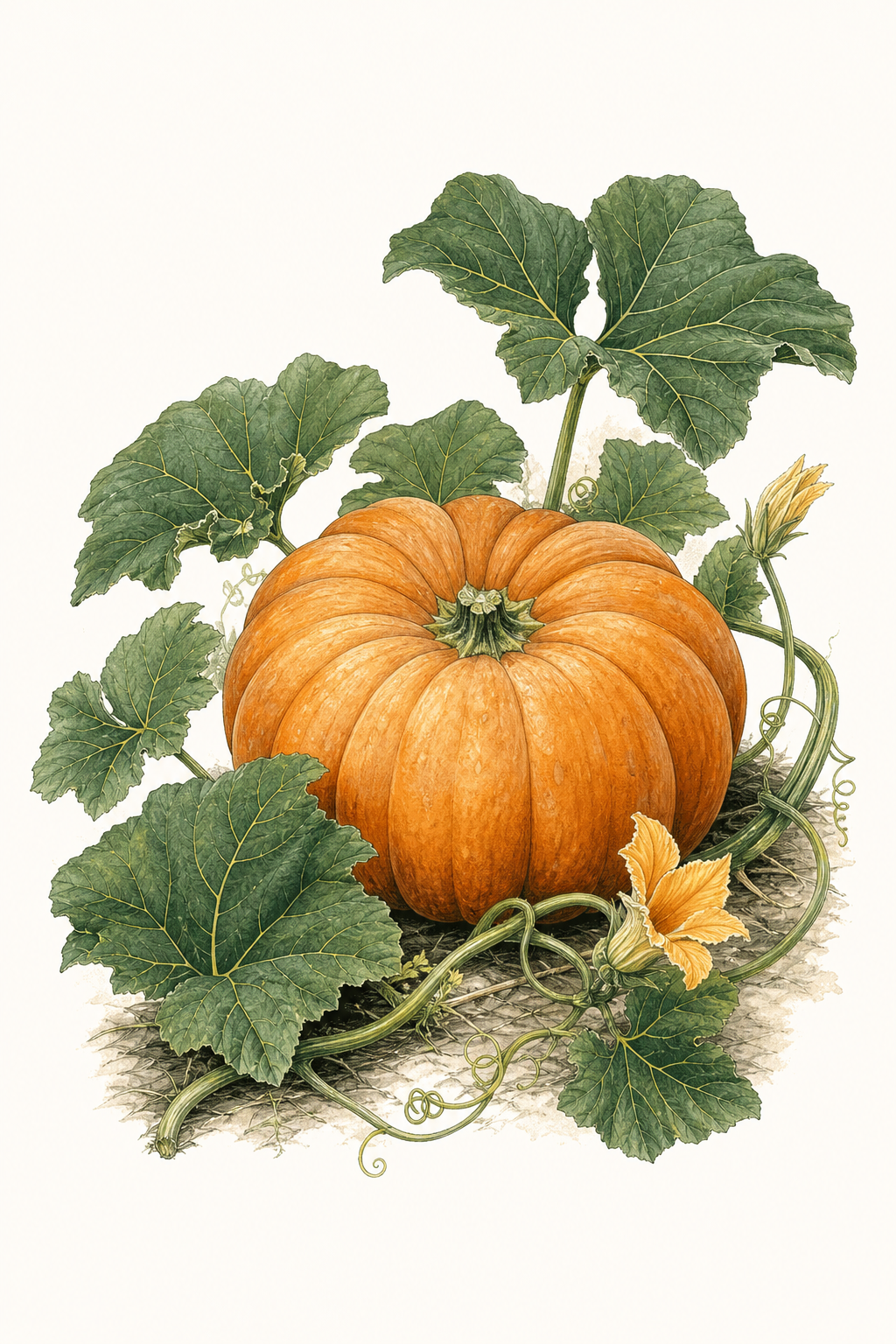
Sink your senses into Big Max’s immense, sun-warmed presence—its thick, velvety rind and rich, deep-orange flesh promise a bold, …
Crop Dates
| Milestone | Date |
|---|---|
| Start Indoors | Jun 1st |
| Last Frost | Jun 15th |
| Transplant / Sow Outdoors | Jun 15th |
| Harvest Begins | Oct 3rd |
| Harvest Ends | Jul 15th |
Crop Details
| Trait | Value |
|---|---|
| Days to Maturity | 110 |
| Sun Requirements | Full Sun |
| Growth Habit | Vine |
| Support Needed | Trellis |
| Planting Depth | Normal |
| Germination Temp (°F) | 70 |
| Min Soil Temp (°F) | 65 |
| Min Night Temp (°F) | 55 |
| Harden Off (days) | 10 |
Recommended Companions
Frequently Asked Questions
Big Max (110 days) — how do I manage powdery mildew if it shows up on the leaves?
How often should I water Big Max during its main growing phase (vines filling out and fruit developing)?
When is Big Max ready to harvest, and how can I confirm it’s mature?
Sink your senses into Big Max’s immense, sun-warmed presence—its thick, velvety rind and rich, deep-orange flesh promise a bold, satisfying sweetness. Expect a substantial, dense texture that holds its character beautifully, making it a standout for hearty roasting and show-stopping preserves, as well as sturdy, flavorful pies and robust sauces. Grow Big Max for the gardener’s thrill of raising a true giant: a single, commanding fruit that turns the patch into a spectacle from first bloom to harvest.
Sowing Tips

Transplant Conditions
Wait until soil reaches 65°F and nights stay above 55°F before moving outdoors. Harden off for 10 days first.

Direct Sow Preferred
Sensitive roots — does not transplant well. If starting indoors, use biodegradable pots and disturb roots as little as possible when moving outdoors.
Expert Note

For best giant-pumpkin results, start with a deeply warmed, compost-rich bed and keep a single strong vine while feeding heavily once plants flower.