
Coral Sunset
Garden Peony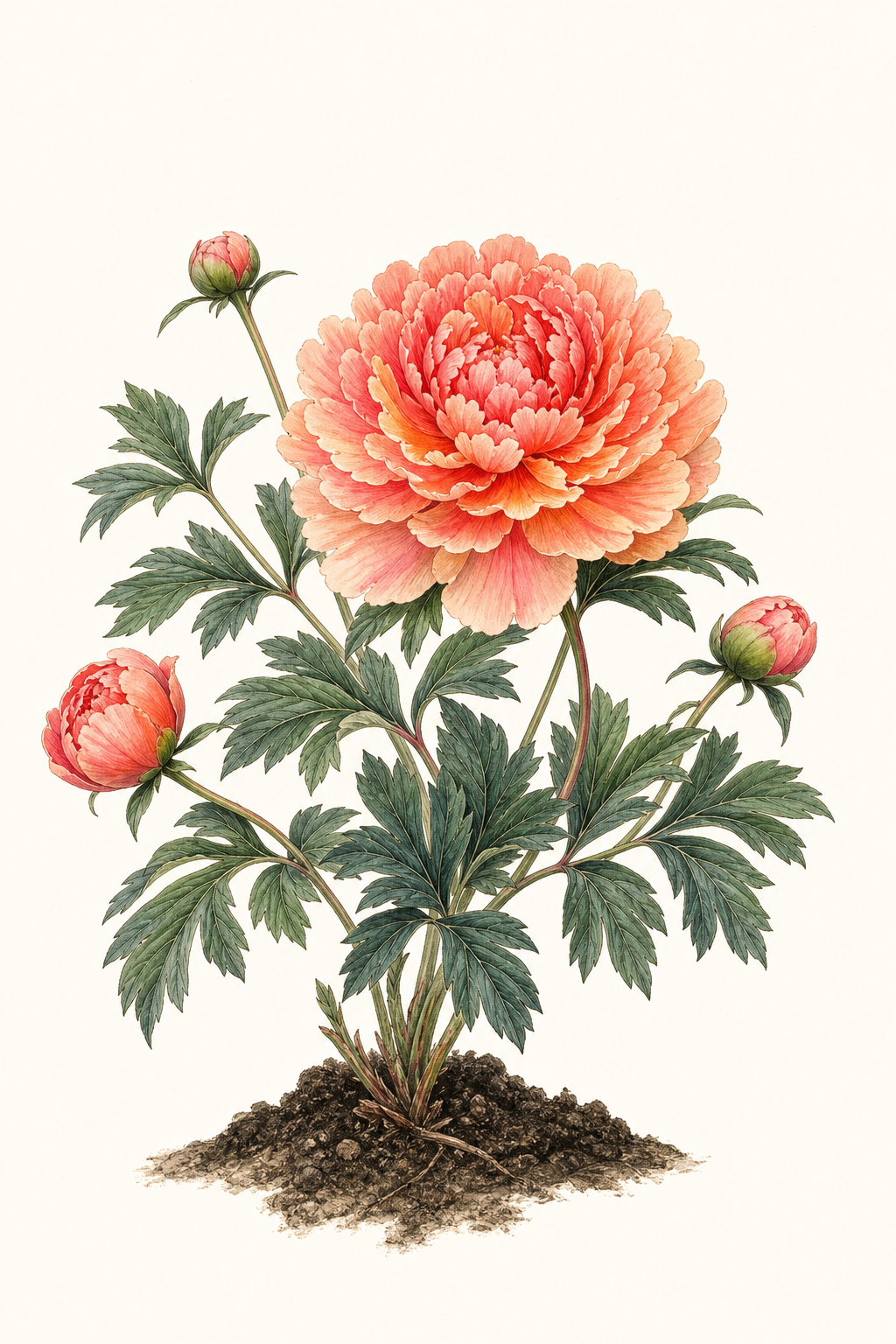
Coral Sunset unfolds in a luminous wash of warm coral-pink and apricot tones, with petals that catch the light like satin. The bl…
Crop Dates
| Milestone | Date |
|---|---|
| Start Indoors | Direct Sow |
| Last Frost | Jun 15th |
| Transplant / Sow Outdoors | Jun 1st |
| Harvest Begins | Jun 1st |
| Harvest Ends | Jul 15th |
Crop Details
| Trait | Value |
|---|---|
| Days to Maturity | N/A |
| Sun Requirements | Part Sun |
| Growth Habit | Clumping |
| Support Needed | None |
| Planting Depth | Normal |
| Germination Temp (°F) | 70 |
| Min Soil Temp (°F) | 50 |
| Min Night Temp (°F) | 28 |
| Harden Off (days) | Not Required |
Frequently Asked Questions
What’s the most common disease issue for Paeonia lactiflora (coral sunset peony) and how do I treat it?
How often should I water Paeonia lactiflora during active growth, and what soil moisture level should I aim for?
How can I tell when my coral sunset peony (Paeonia lactiflora) is ready to harvest for cut flowers?
Coral Sunset unfolds in a luminous wash of warm coral-pink and apricot tones, with petals that catch the light like satin. The blooms are richly layered and generously full, offering a velvety, cloudlike texture that turns any border into a living centerpiece. Ideal for long-lasting garden display, Coral Sunset shines most when planted for standout flowering in perennial beds and mixed plantings where its sunset hues can be admired from every angle.
Sowing Tips

Transplant Conditions
Wait until soil reaches 50°F and nights stay above 28°F before moving outdoors.
Expert Note

Plant peony roots so the eyes (buds) sit about 1–2 in deep; deeper planting is the most common reason for poor flowering.