
Dwarf Artichoke
Artichoke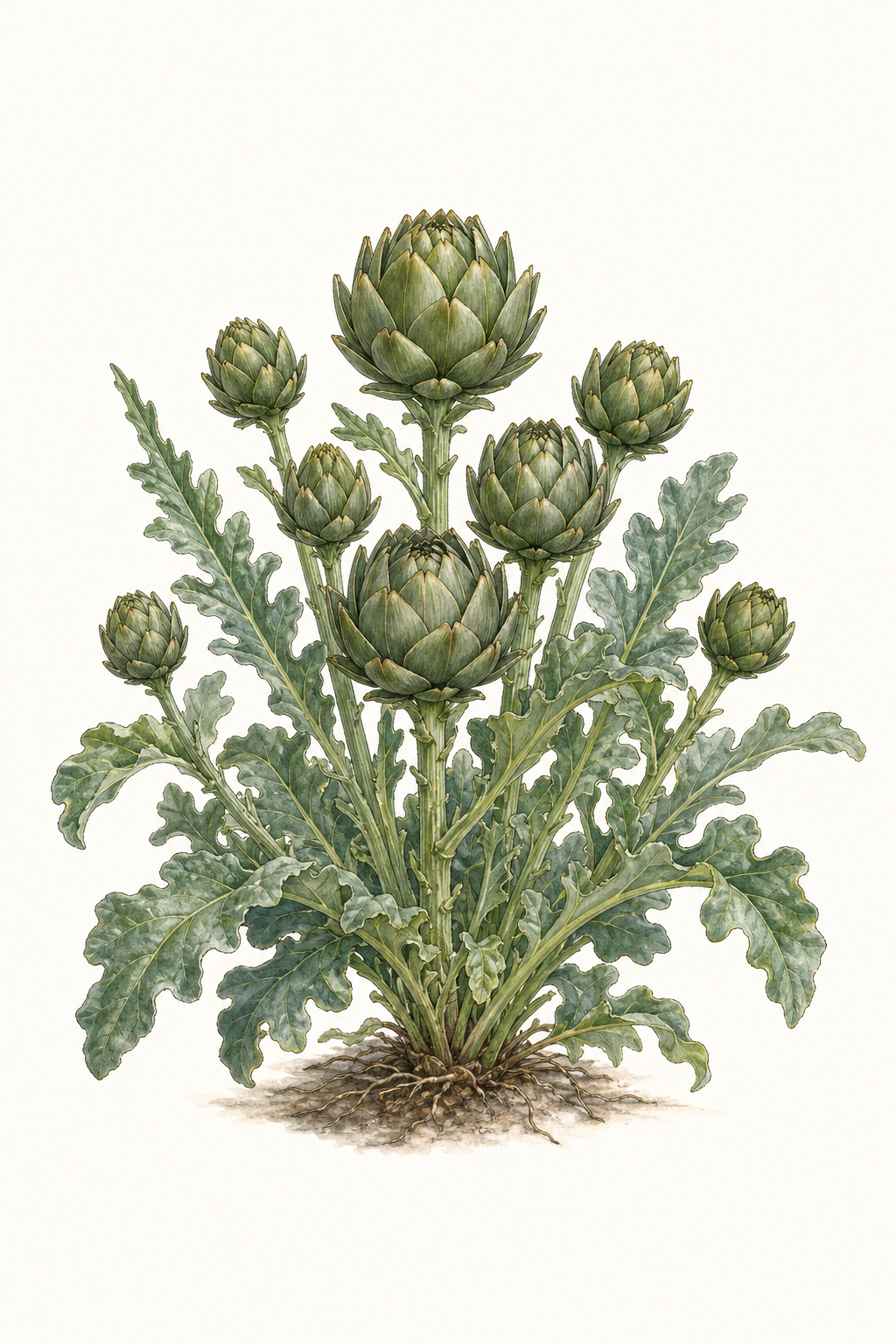
Sink your spoon into tender, baby artichokes of the Dwarf Artichoke variety, where tightly packed scales open to reveal a buttery…
Crop Dates
| Milestone | Date |
|---|---|
| Start Indoors | Apr 20th |
| Last Frost | Jun 15th |
| Transplant / Sow Outdoors | Jun 1st |
| Harvest Begins | Aug 15th |
| Harvest Ends | Jul 15th |
Crop Details
| Trait | Value |
|---|---|
| Days to Maturity | 75 |
| Sun Requirements | Full Sun |
| Growth Habit | Clumping |
| Support Needed | None |
| Planting Depth | Normal |
| Germination Temp (°F) | 68 |
| Min Soil Temp (°F) | 45 |
| Min Night Temp (°F) | 40 |
| Harden Off (days) | 7 |
Recommended Companions
Frequently Asked Questions
What pest or disease commonly affects Cynara scolymus (dwarf artichoke), and how do I control it?
How often should I water dwarf artichokes during their main growing phase, and what soil moisture level do they need?
How can I tell when my dwarf artichoke is ready to harvest?
Sink your spoon into tender, baby artichokes of the Dwarf Artichoke variety, where tightly packed scales open to reveal a buttery, nutty heart with a gentle, green sweetness. Plants form compact rosettes that produce an appealing parade of small, uniform buds—ideal for roasting until the edges turn savory and caramel-kissed, or for fresh preparations where their crisp, delicate texture shines. A charming choice for gardeners who want big artichoke flavor in a manageable, garden-friendly size.
Sowing Tips

Transplant Conditions
Wait until soil reaches 45°F and nights stay above 40°F before moving outdoors. Harden off for 7 days first.
Expert Note

Start plants indoors early and transplant after nights warm up; keep crowns mulched and avoid letting the soil dry out during bud formation.