
Flying Saucer
Pattypan Squash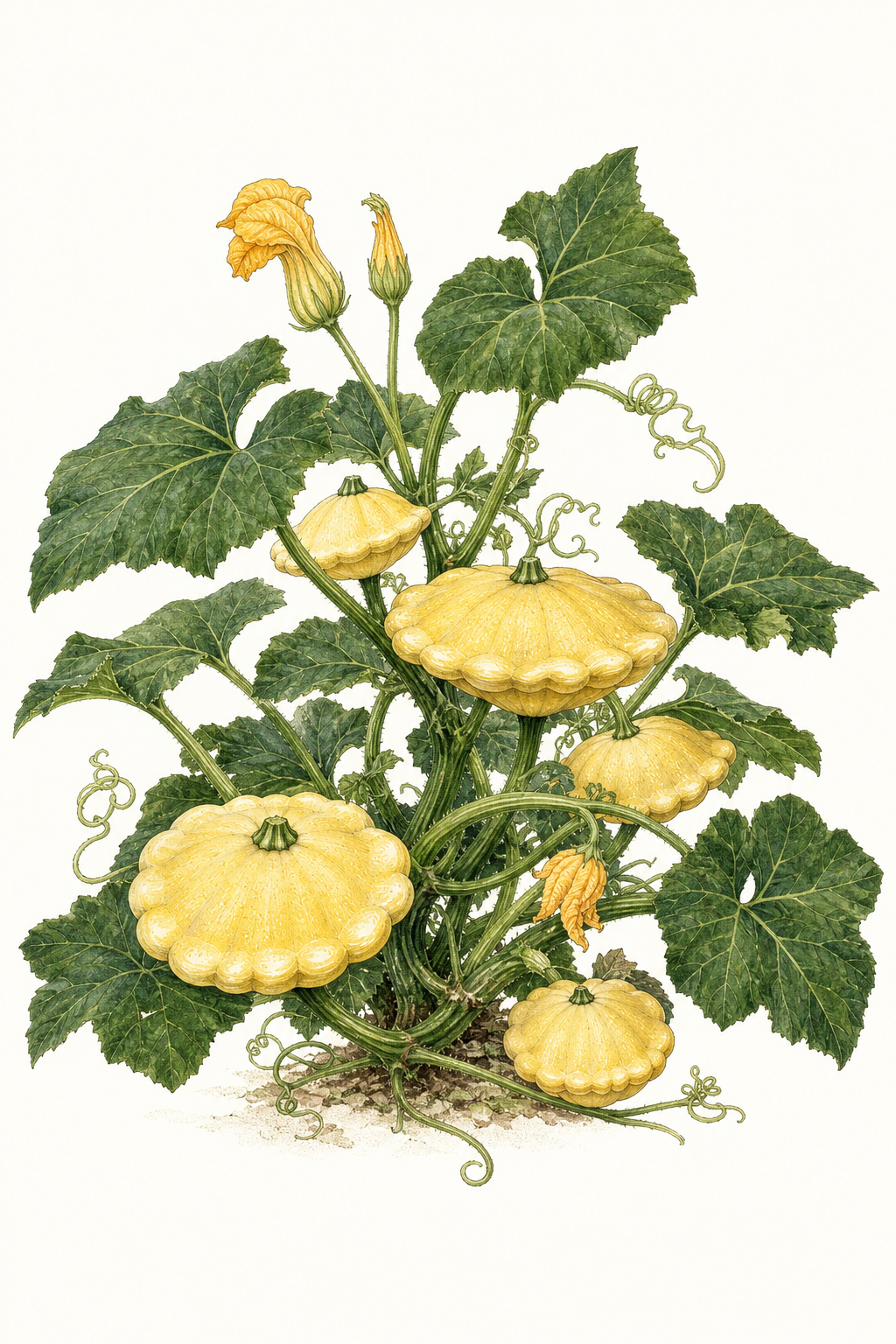
Velvety-smooth, saucer-flat rounds with a gently fluted rim arrive in a vivid, sunlit palette—tender, mild, and delicately sweet …
Crop Dates
| Milestone | Date |
|---|---|
| Start Indoors | Jun 1st |
| Last Frost | Jun 15th |
| Transplant / Sow Outdoors | Jun 15th |
| Harvest Begins | Aug 4th |
| Harvest Ends | Jul 15th |
Crop Details
| Trait | Value |
|---|---|
| Days to Maturity | 50 |
| Sun Requirements | Full Sun |
| Growth Habit | Vine |
| Support Needed | None |
| Planting Depth | Normal |
| Germination Temp (°F) | 70 |
| Min Soil Temp (°F) | 65 |
| Min Night Temp (°F) | 55 |
| Harden Off (days) | 10 |
Recommended Companions
Frequently Asked Questions
What pests or diseases commonly hit Cucurbita pepo (Flying Saucer) and how can I stop them early?
How often should I water Flying Saucer (Cucurbita pepo) during the main growing phase?
How do I tell when Flying Saucer squash (Cucurbita pepo) is ready to harvest?
Velvety-smooth, saucer-flat rounds with a gently fluted rim arrive in a vivid, sunlit palette—tender, mild, and delicately sweet with a clean, fresh flavor. “Flying Saucer” pattypan squash forms compact plants that produce abundant, palm-sized fruits with crisp, fine-grained texture at peak harvest, ideal for quick skillet favorites, roasting, and grilling, as well as bright additions to summer sauces and pickles. Grow it for a steady stream of colorful, easy-to-love squash that look as good as they taste on the plate.
Sowing Tips

Transplant Conditions
Wait until soil reaches 65°F and nights stay above 55°F before moving outdoors. Harden off for 10 days first.

Direct Sow Preferred
Sensitive roots — does not transplant well. If starting indoors, use biodegradable pots and disturb roots as little as possible when moving outdoors.
Expert Note

For compact pattypan growth, keep fruits picked young (about 3–5 inches) to boost continued production.