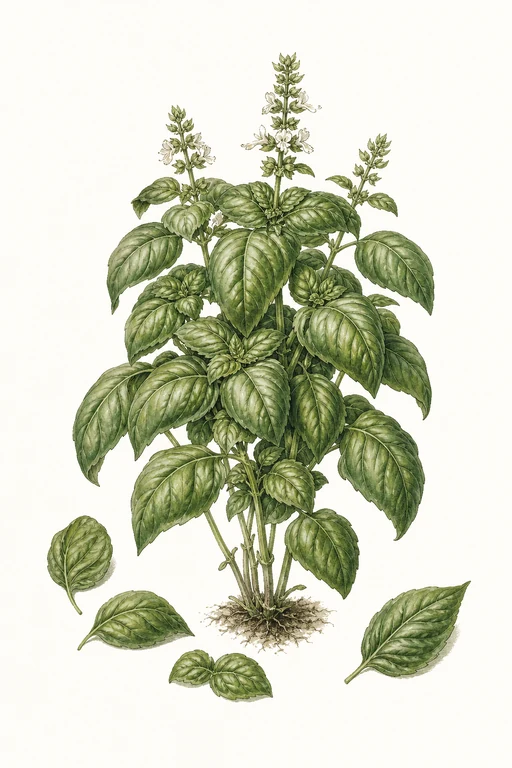
Genovese Basil
Basil
🌱 60d to harvest
Upright
Fragrant as a sunlit garden path, Genovese Basil unfurls with richly aromatic leaves that feel velvety to the touch and hold thei…
Crop Dates
| Milestone | Date |
|---|---|
| Start Indoors | May 25th |
| Last Frost | Jun 15th |
| Transplant / Sow Outdoors | Aug 3rd |
| Harvest Begins | Oct 2nd |
| Harvest Ends | Jul 15th |
Crop Details
| Trait | Value |
|---|---|
| Days to Maturity | 60 |
| Sun Requirements | Full Sun |
| Growth Habit | Upright |
| Support Needed | None |
| Planting Depth | Normal |
| Germination Temp (°F) | 70 |
| Min Soil Temp (°F) | 60 |
| Min Night Temp (°F) | 50 |
| Harden Off (days) | 10 |
Recommended Companions
Frequently Asked Questions
What is the most common disease issue for Ocimum basilicum (Genovese basil), and how can I prevent it?
Basil commonly suffers from downy mildew (often seen as yellow patches on leaves with a gray-purple growth underneath) and it spreads quickly in cool, humid conditions. Grow basil in full sun with good airflow, water at the soil line (not onto leaves), and remove any infected leaves immediately to slow spread. If you see downy mildew, treat early with a labeled protectant for downy mildew on herbs and avoid overhead watering until plants dry fast.
How often should I water Genovese basil during peak growth, and what soil moisture level should I maintain?
During the main growth phase (after plants are established), keep soil evenly moist but never waterlogged—aim for the top 1 inch of soil to dry slightly before watering again. In full sun, this typically means watering about 1–2 times per week, but adjust to weather so leaves don’t wilt and stems don’t stay soggy. If you’re container-growing, check more often because basil dries faster and needs more frequent, lighter watering to maintain steady moisture.
How do I know when Ocimum basilicum (Genovese basil) is ready to harvest?
Harvest when plants reach about 6–8 inches tall and have several sets of mature leaves (around 50–60 days), before flowers open. To harvest, pinch or cut just above a leaf pair to encourage branching, and take light, frequent harvests rather than stripping one big cut. If you start seeing buds, begin harvesting more aggressively to delay flowering and maintain leaf quality.