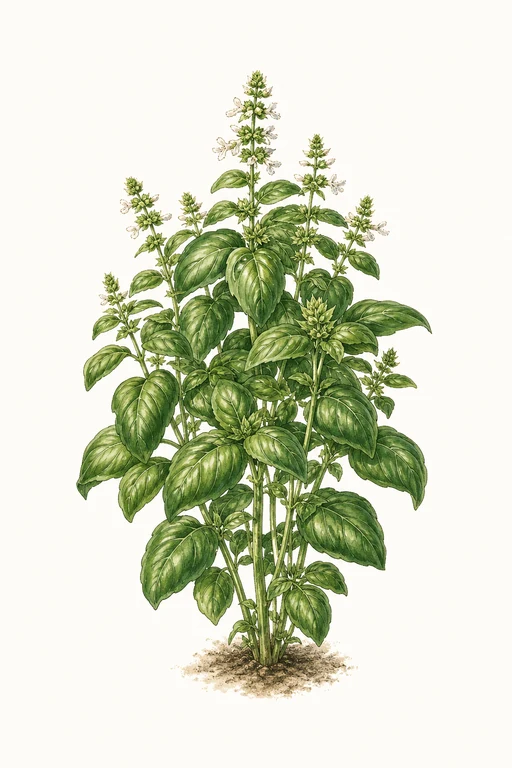
Genovese Emily
Basil
🌱 45d to harvest
Bush
Fragrant as a summer breeze, Genovese Emily basil fills the garden with a vivid, sweet-anise perfume and a bright, true-green all…
Crop Dates
| Milestone | Date |
|---|---|
| Start Indoors | May 18th |
| Last Frost | Jun 15th |
| Transplant / Sow Outdoors | Aug 10th |
| Harvest Begins | Sep 24th |
| Harvest Ends | Jul 15th |
Crop Details
| Trait | Value |
|---|---|
| Days to Maturity | 45 |
| Sun Requirements | Full Sun |
| Growth Habit | Bush |
| Support Needed | None |
| Planting Depth | Normal |
| Germination Temp (°F) | 70 |
| Min Soil Temp (°F) | 60 |
| Min Night Temp (°F) | 50 |
| Harden Off (days) | 10 |
Recommended Companions
Frequently Asked Questions
What pest or disease is most common on Ocimum basilicum (Genovese basil), and what should I do if I see it?
Fusarium wilt can show up as sudden wilting plus yellowing, often with browning inside the stems; it may spread in warm, wet conditions. Remove affected plants immediately, avoid reusing that potting mix or soil, and water only the base (not the leaves) so foliage stays dry. If you’re starting new plants, use fresh seed-start mix and ensure good spacing for airflow in full sun.
How often should I water Ocimum basilicum during the main growing phase (around the time it’s actively leafing out)?
Water when the top 1 inch of soil feels dry, which is usually every 2–4 days depending on heat and container size. Keep the soil evenly moist but never soggy—basil roots in waterlogged conditions and leaf issues increase in persistent dampness. If growing in containers, check daily in hot weather and aim for thorough, slow watering until excess drains away.
How can I tell when Genovese basil (Ocimum basilicum) is ready to harvest?
Start harvesting around 35–45 days after sowing when plants are bushy and have several sets of healthy leaves (typically after they reach about 8–10 inches tall). Harvest by snipping just above a pair of leaves to encourage branching, and avoid stripping more than about one-third of the plant at a time. If you see flower buds forming, begin harvesting more frequently because leaves become smaller and more bitter after flowering starts.