
Giant Flat Dutch
Cabbage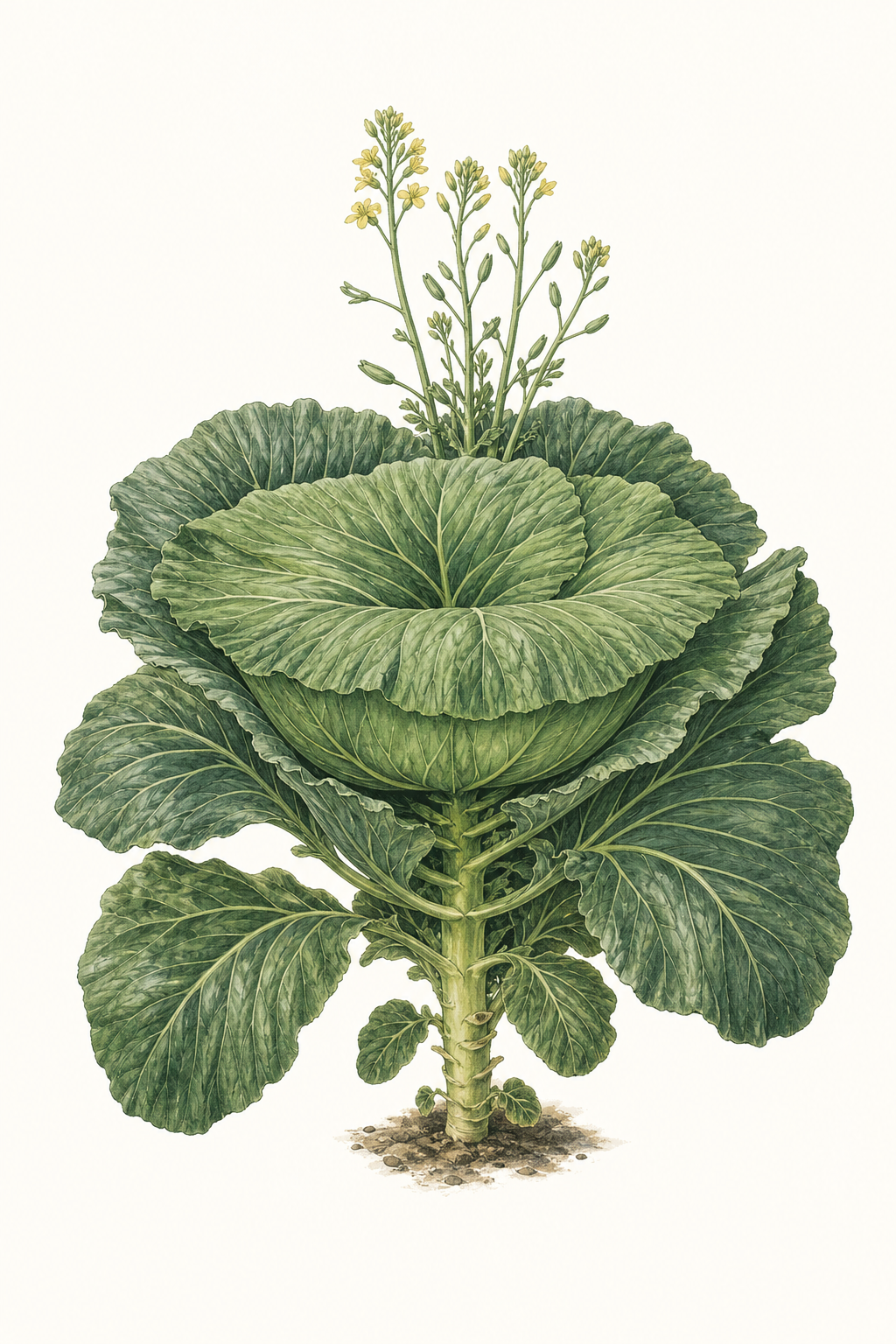
Sweetly savory and richly aromatic, Giant Flat Dutch forms broad, flat heads with a dense, crisp bite and a beautifully tight lea…
Crop Dates
| Milestone | Date |
|---|---|
| Start Indoors | May 18th |
| Last Frost | Jun 15th |
| Transplant / Sow Outdoors | Jun 8th |
| Harvest Begins | Sep 1st |
| Harvest Ends | Jul 15th |
Crop Details
| Trait | Value |
|---|---|
| Days to Maturity | 85 |
| Sun Requirements | Full Sun |
| Growth Habit | Rosette |
| Support Needed | None |
| Planting Depth | Normal |
| Germination Temp (°F) | 45 |
| Min Soil Temp (°F) | 45 |
| Min Night Temp (°F) | 32 |
| Harden Off (days) | 6 |
Recommended Companions
Frequently Asked Questions
What pests or diseases commonly affect Brassica oleracea var. capitata (cabbage/Flat Dutch), and how can I prevent or treat them?
How often should I water Brassica oleracea var. capitata during the main head-forming phase?
How can I tell when Brassica oleracea var. capitata (Flat Dutch) is ready to harvest?
Sweetly savory and richly aromatic, Giant Flat Dutch forms broad, flat heads with a dense, crisp bite and a beautifully tight leaf wrap. The surface is finely textured and deeply veined, holding its shape through cool weather for dependable, satisfying harvests. Ideal for hearty cabbage dishes—shredding for slaws, simmering for braises, and fermenting for tangy kraut—this is a classic Flat Dutch performer with extra presence in the garden.
Sowing Tips

Transplant Conditions
Wait until soil reaches 45°F and nights stay above 32°F before moving outdoors. Harden off for 6 days first.
Expert Note

For oversized heads, keep temperatures evenly cool and avoid moisture swings after transplanting; consistent watering is key for large cabbage.