
Italian Edible
Bottle Gourd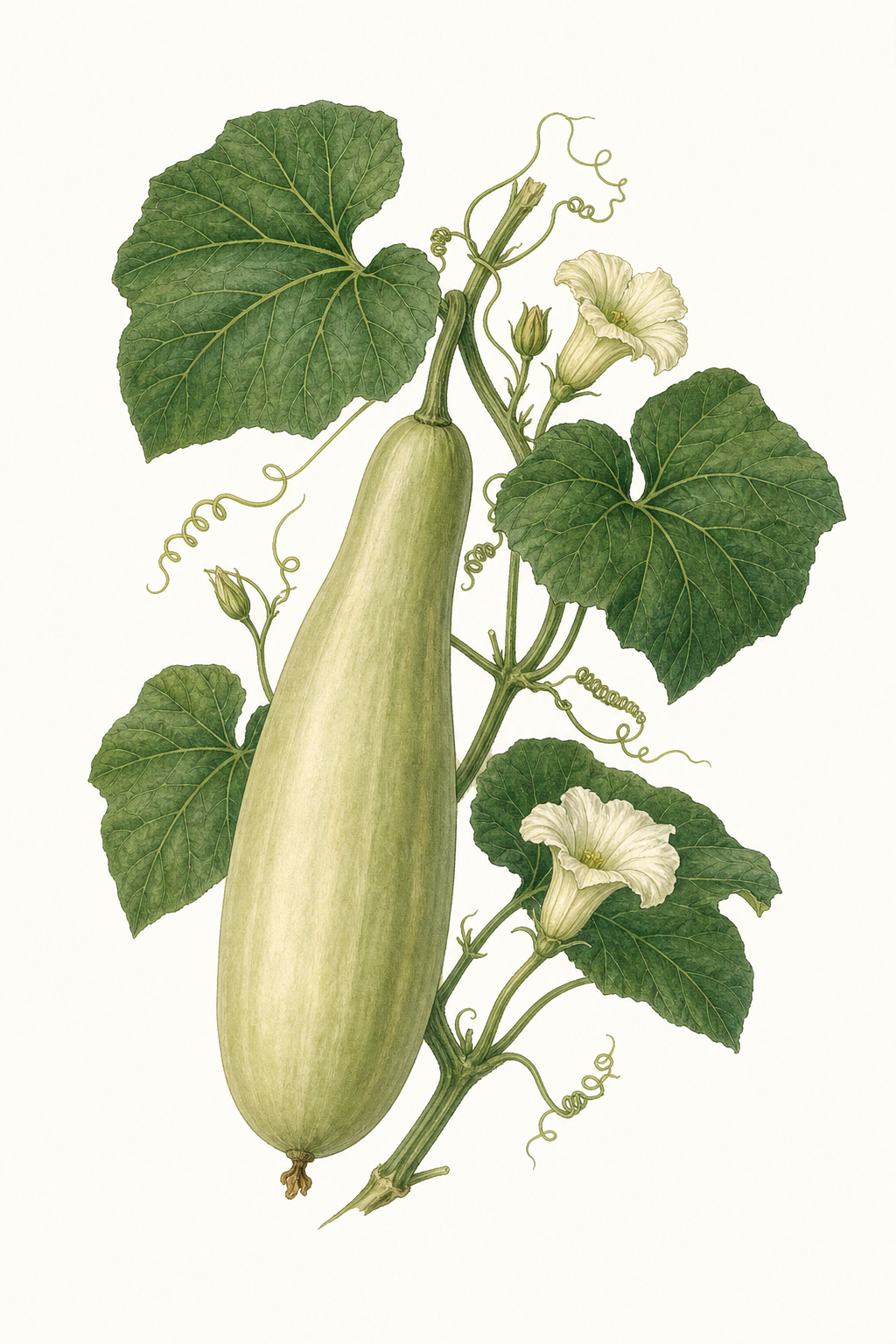
Fragrant, tender flesh with a clean, mild sweetness and a pleasantly crisp bite—Italian Edible bottle gourd delivers a garden-to-…
Crop Dates
| Milestone | Date |
|---|---|
| Start Indoors | Jun 1st |
| Last Frost | Jun 15th |
| Transplant / Sow Outdoors | Jun 15th |
| Harvest Begins | Aug 24th |
| Harvest Ends | Jul 15th |
Crop Details
| Trait | Value |
|---|---|
| Days to Maturity | 70 |
| Sun Requirements | Full Sun |
| Growth Habit | Vine |
| Support Needed | Trellis |
| Planting Depth | Normal |
| Germination Temp (°F) | 80 |
| Min Soil Temp (°F) | 65 |
| Min Night Temp (°F) | 55 |
| Harden Off (days) | 10 |
Recommended Companions
Frequently Asked Questions
Why are my Lagenaria siceraria (Italian edible gourd) leaves turning yellow with powdery patches, and what can I do?
How often should I water Lagenaria siceraria during active vine growth, and what soil moisture level should I aim for?
How do I tell when my Italian edible gourd (Lagenaria siceraria) is ready to harvest?
Fragrant, tender flesh with a clean, mild sweetness and a pleasantly crisp bite—Italian Edible bottle gourd delivers a garden-to-table delight with a refined, never-bitter character. At maturity, the fruit’s smooth, elongated silhouette holds up beautifully for roasting, simmering into savory sauces, and fresh preparation, while its pale interior stays juicy and inviting. Grow it for reliable, long-season performance and a harvest that feels as elegant as it tastes.
Sowing Tips

Transplant Conditions
Wait until soil reaches 65°F and nights stay above 55°F before moving outdoors. Harden off for 10 days first.

Direct Sow Preferred
Sensitive roots — does not transplant well. If starting indoors, use biodegradable pots and disturb roots as little as possible when moving outdoors.
Expert Note

Warm the soil well and keep moisture steady until vines establish—bottle gourds dislike cold stress and irregular watering early on.