
Javelin
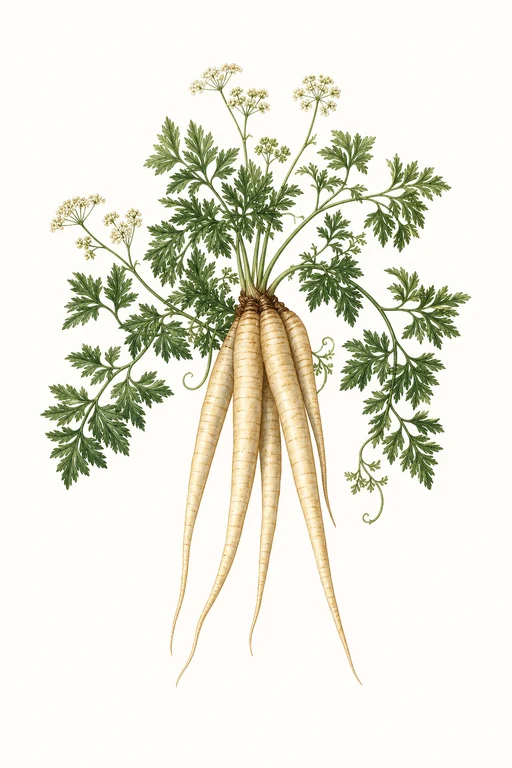
Sweet and luminous, Javelin parsnips develop a creamy, honeyed depth with a tender bite and a smooth, satiny surface that feels almost polished in the hand. At maturity, the long, spear-shaped roots hold their flavor beautifully—ideal for roasting until caramel-kissed, simmering into silky purées, or grating into rich sauces and hearty soups. Grow Javelin for a dependable 110-day season and a harvest that’s as satisfying to display as it is to savor.
Sowing Tips

Soil Temperature
Direct sow or transplant when soil at planting depth holds 40°F for reliable germination and early growth.
Expert Note

Parsnip seed is slow and can be erratic—keep the bed evenly moist until emergence and thin to proper spacing once seedlings are established.
Crop Dates
| Milestone | Date |
|---|---|
| Last Frost | Jun 15th |
| Growing Approach | Protected Environment Only |
Crop Details
| Trait | Value |
|---|---|
| Days to Maturity | 110 |
| Sun Requirements | Full Sun |
| Growth Habit | Taproot |
| Support Needed | None |
| Planting Depth | Normal |
| Germination Temp (°F) | 50 |
| Min Soil Temp (°F) | 40 |
| Min Night Temp (°F) | 28 |
| Harden Off (days) | Not Required |
Recommended Companions

Frequently Asked Questions
What’s the most common disease problem for Pastinaca sativa (parsnip) called “Javelin,” and how do I manage it?
During the main growing phase, how often should I water Pastinaca sativa (parsnip) “Javelin,” and what soil moisture level should I maintain?
How can I tell when “Javelin” parsnips (Pastinaca sativa) are ready to harvest?
Sowing Tips
Soil Temperature
Direct sow or transplant when soil at planting depth holds 40°F for reliable germination and early growth.
Expert Note
Parsnip seed is slow and can be erratic—keep the bed evenly moist until emergence and thin to proper spacing once seedlings are established.
Sweet and luminous, Javelin parsnips develop a creamy, honeyed depth with a tender bite and a smooth, satiny surface that feels almost polished in the hand. At maturity, the long, spear-shaped roots hold their flavor beautifully—ideal for roasting until caramel-kissed, simmering into silky purées, or grating into rich sauces and hearty soups. Grow Javelin for a dependable 110-day season and a harvest that’s as satisfying to display as it is to savor.