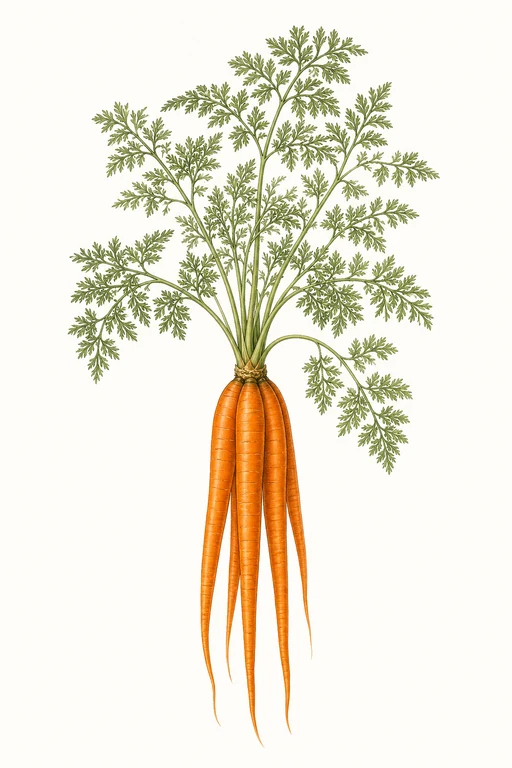
Nanling
Carrot
🌱 75d to harvest
Rosette
Sweet and vividly crisp from the first bite, Nanling Imperator carrots form long, tapered roots with a rich, saturated orange glo…
Crop Dates
| Milestone | Date |
|---|---|
| Start Indoors | Direct Sow |
| Last Frost | Jun 15th |
| Transplant / Sow Outdoors | Jun 15th |
| Harvest Begins | Aug 29th |
| Harvest Ends | Jul 15th |
Crop Details
| Trait | Value |
|---|---|
| Days to Maturity | 75 |
| Sun Requirements | Full Sun |
| Growth Habit | Rosette |
| Support Needed | None |
| Planting Depth | Normal |
| Germination Temp (°F) | 75 |
| Min Soil Temp (°F) | 45 |
| Min Night Temp (°F) | 35 |
| Harden Off (days) | Not Required |
Recommended Companions
Frequently Asked Questions
What pest or disease is most common on Daucus carota (carrot) in home gardens, and how can I control it?
Carrot root fly can be the biggest pest, causing tunnels and rotting in the roots. Cover beds with fine insect netting as soon as you sow, keep weeds down, and thin seedlings promptly to avoid attracting flies; if damage appears, remove affected roots to prevent further spread. Watch for Alternaria leaf blight (dark leaf spots) and improve airflow by spacing plants well and watering at the soil line rather than wetting the foliage.
How often should I water Daucus carota (Nanling carrot) during peak growth to keep roots developing well?
During the main growing phase, keep the top 1–2 inches of soil evenly moist—typically watering about 1–2 times per week, but adjust so the bed never dries out completely. Carrots form best when moisture is consistent; irregular watering can lead to cracking and misshapen roots. Water deeply to reach the active rooting zone, then avoid re-saturating right after the soil starts to dry on the surface.
How do I tell when Nanling carrots are ready to harvest (Daucus carota var. sativus)?
Start checking around 70–75 days after sowing by gently pulling one plant and checking root diameter. Harvest when roots have reached the expected size for the variety and the shoulders are firm; if you see significant cracking or the tops look overly stressed, pull sooner. For the best texture and sweetness, harvest after a light cool period and don’t leave roots in the ground much longer than maturity.