
Norland Red
Potato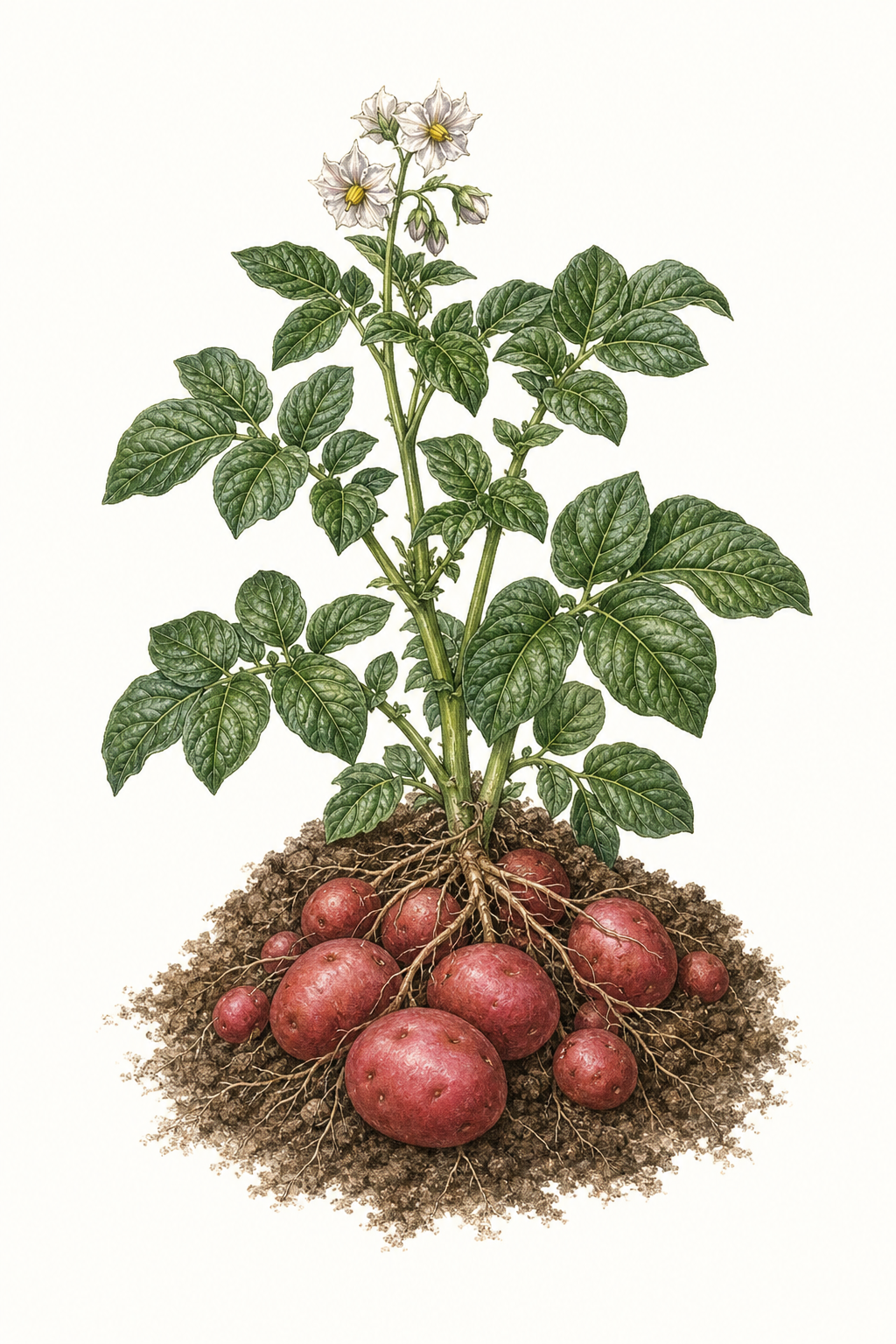
Velvety-skinned Norland Red potatoes arrive with a deep rose-red blush over smooth, evenly shaped tubers, and a creamy, fine-grai…
Crop Dates
| Milestone | Date |
|---|---|
| Start Indoors | Direct Sow |
| Last Frost | Jun 15th |
| Transplant / Sow Outdoors | Jun 15th |
| Harvest Begins | Aug 24th |
| Harvest Ends | Jul 15th |
Crop Details
| Trait | Value |
|---|---|
| Days to Maturity | 70 |
| Sun Requirements | Full Sun |
| Growth Habit | Upright |
| Support Needed | None |
| Planting Depth | Normal |
| Germination Temp (°F) | 50 |
| Min Soil Temp (°F) | 45 |
| Min Night Temp (°F) | 28 |
| Harden Off (days) | Not Required |
Recommended Companions
Frequently Asked Questions
What’s a common potato (Solanum tuberosum) disease or pest issue, and how should I respond?
How often should I water Norland Red potatoes during the main growing phase, and what soil moisture level do they need?
How can I tell when Norland Red (Solanum tuberosum) is ready to harvest?
Velvety-skinned Norland Red potatoes arrive with a deep rose-red blush over smooth, evenly shaped tubers, and a creamy, fine-grained interior that feels almost satin-smooth in the bowl. Their balanced flavor turns especially appealing when you want dependable results—tender, not watery, with a gentle sweetness that shines in classic home favorites. Grow Norland Red for a reliable 70-day harvest and a harvest that looks as beautiful as it tastes, from first dig to the last bagged tuber.
Sowing Tips

Transplant Conditions
Wait until soil reaches 45°F and nights stay above 28°F before moving outdoors.
Expert Note

Plant certified seed potatoes after the soil warms, keep hilling as plants grow, and maintain even moisture to maximize tuber set.