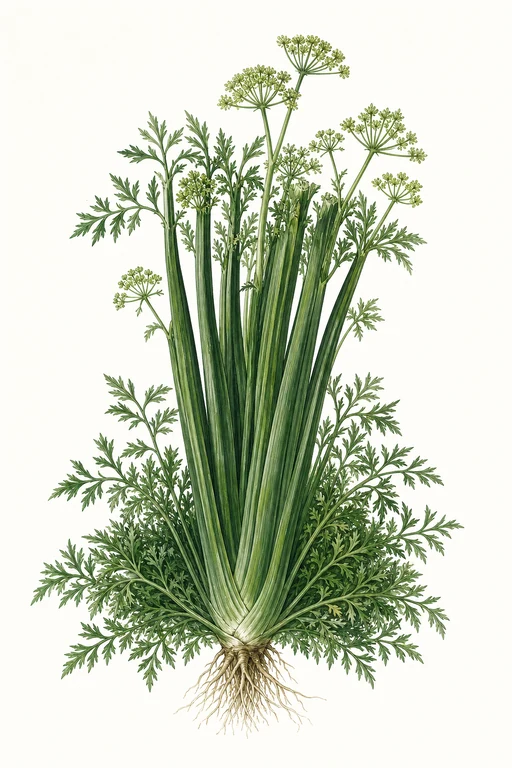
Par-Cel
Celery
🌱 60d to harvest
Rosette
Fragrant and vividly crisp, Par-Cel delivers cutting celery with a cool, green snap and a bright, herbal depth that lingers on th…
Crop Dates
| Milestone | Date |
|---|---|
| Start Indoors | Direct Sow |
| Last Frost | Jun 15th |
| Transplant / Sow Outdoors | Jun 15th |
| Harvest Begins | Aug 14th |
| Harvest Ends | Jul 15th |
Crop Details
| Trait | Value |
|---|---|
| Days to Maturity | 60 |
| Sun Requirements | Part Sun |
| Growth Habit | Rosette |
| Support Needed | None |
| Planting Depth | Surface |
| Germination Temp (°F) | 70 |
| Min Soil Temp (°F) | 40 |
| Min Night Temp (°F) | 35 |
| Harden Off (days) | 5 |
Recommended Companions
Frequently Asked Questions
What pest or disease commonly affects Par-Cel (Apium graveolens var. secalinum), and how do I treat it?
Par-Cel is prone to leaf blight and rust-like spotting from warm, humid conditions (often showing up as brown/bronze lesions on leaves). Remove affected leaves promptly and improve airflow by spacing plants and watering at the soil line rather than over the foliage. If problems persist, apply a labeled fungicide for celery/Apiaceae leaf diseases and start preventing early whenever weather stays humid.
How often should I water Par-Cel during the main growing phase?
During active growth (after seedlings establish), keep the soil consistently moist but not waterlogged—aim for evenly damp soil down several inches. Water about 1–2 times per week depending on heat, increasing frequency during dry spells, and stop short of soggy beds that can trigger root problems. A simple check: the top 1 inch should be moist; if it dries out and crusts, water sooner.
How can I tell when Par-Cel is ready to harvest at about 60 days?
Par-Cel is ready when the edible roots are well-formed and feel firm, with the plant’s outer leaves looking healthy and less “fresh/juvenile.” Typically you can harvest start-to-finish around 60 days after sowing, but for best flavor wait until the roots are noticeably thicker at the soil surface. Gently lift one plant to confirm root size, then harvest the rest.