SproutSmart
SproutSmart Intelligent Garden Sowing

Poblano

Pepper
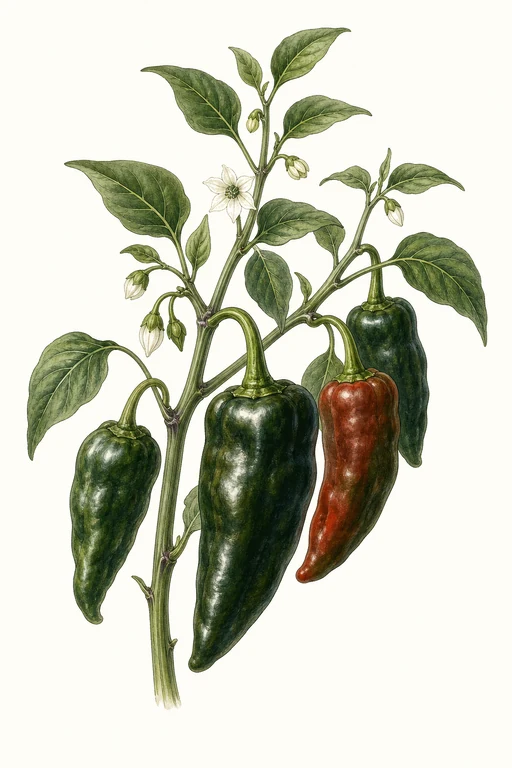
Botanical illustration of Poblano
🌱 75d to harvest Upright

Aromatic and richly earthy, Poblano delivers a deep, warm-green allure that ripens toward a burnished red-brown—its flavor both s…

Planting Schedule

Add Poblano to your garden to build a schedule and get reminders.

Crop Dates

MilestoneDate
Start IndoorsApr 27th
Last FrostJun 15th
Transplant / Sow OutdoorsAug 10th
Harvest BeginsOct 24th
Harvest EndsJul 15th

Crop Details

TraitValue
Days to Maturity75
Sun RequirementsFull SunFull sun
Growth HabitUpright
Support NeededStake
Planting DepthNormal
Germination Temp (°F)80
Min Soil Temp (°F)60
Min Night Temp (°F)50
Harden Off (days)10

Frequently Asked Questions


What pest or disease problem is most common on poblano (Capsicum annuum), and how can I address it?
A frequent issue is aphids and thrips, which can cause leaf curl and transmit viruses; check the undersides of leaves weekly. Rinse plants with a strong spray of water, then apply insecticidal soap directly to affected leaf surfaces (especially undersides) and repeat every 5–7 days until new growth is clear. If you see wilting or brown stem lesions, remove affected plants early to limit disease spread in Solanaceae beds.
How often should I water poblano during the main growing phase, and what soil moisture should I aim for?
During flowering and fruit set, keep the soil consistently evenly moist—typically about 1 to 2 inches (2.5–5 cm) of water per week depending on heat and container size. Water deeply so moisture reaches several inches down, then let the top 1 inch (2.5 cm) of soil dry slightly before watering again. Mulch around plants helps maintain steady moisture and reduces stress that can cause blossom drop.
How do I tell when poblano (Capsicum annuum) is ready to harvest?
Harvest when pods are fully sized and firm, usually around 70–80 days after transplanting; poblanos are commonly picked green, glossy, and about 4–7 inches (10–18 cm) long. If you wait longer, they will turn darker red and become hotter, but for classic poblano use, pick while still green. Use scissors or a sharp knife to cut the stem to avoid tearing the plant.
Botanical illustration of Poblano

Aromatic and richly earthy, Poblano delivers a deep, warm-green allure that ripens toward a burnished red-brown—its flavor both smoky and gently hot, with a velvety, thick-walled bite. The peppers are broad and tapered like small lanterns, holding their shape beautifully whether you’re roasting for bold charred notes, simmering into sauces, or drying toward ancho-style sweetness for later use. For home gardeners, Poblano is a satisfying 75-day crop that rewards steady warmth with peppers that feel substantial in the hand and sing with complexity on the palate.

Sowing Tips

Transplant Conditions

Wait until soil reaches 60°F and nights stay above 50°F before moving outdoors. Harden off for 10 days first.

Expert Note

For best poblano/ancho flavor, keep soil consistently warm and avoid cold shocks—transplant only when night temps stay above ~50°F and the soil is at least 60°F.