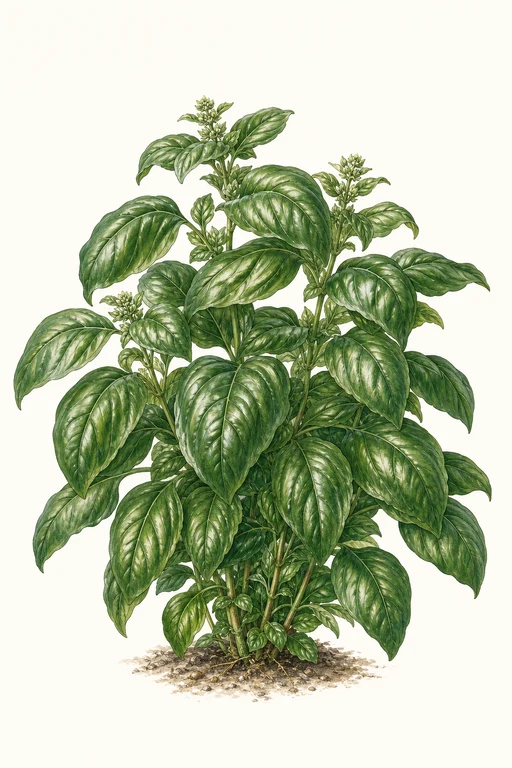
Rutgers Devotion
Basil
🌱 50d to harvest
Upright
Fragrant as a warm summer breeze, Rutgers Devotion Italian basil unfurls into lush, glossy leaves with a sweet, peppery lift and …
Crop Dates
| Milestone | Date |
|---|---|
| Start Indoors | May 18th |
| Last Frost | Jun 15th |
| Transplant / Sow Outdoors | Jul 27th |
| Harvest Begins | Sep 15th |
| Harvest Ends | Jul 15th |
Crop Details
| Trait | Value |
|---|---|
| Days to Maturity | 50 |
| Sun Requirements | Full Sun |
| Growth Habit | Upright |
| Support Needed | None |
| Planting Depth | Normal |
| Germination Temp (°F) | 75 |
| Min Soil Temp (°F) | 60 |
| Min Night Temp (°F) | 50 |
| Harden Off (days) | 10 |
Recommended Companions
Frequently Asked Questions
What pests or diseases commonly affect Ocimum basilicum (basil) like Rutgers Devotion, and how do I control them?
Watch for basil downy mildew (yellowing spots on upper leaves with gray-purple growth underneath) and for aphids that cluster on new growth. Remove and discard infected leaves early, improve airflow, and avoid wetting foliage when watering. For aphids, spray plants with a strong jet of water and repeat every 2–3 days; if needed, use an insecticidal soap, focusing on leaf undersides and new shoots.
How often should I water Ocimum basilicum during its main growing phase, and what soil moisture level should I maintain?
During active leaf growth, keep the top 1 inch of soil evenly moist but not soggy; basil in containers typically needs watering about every 2–4 days depending on heat. Water at the soil level in the morning so leaves dry quickly, because continuously wet foliage encourages mildew. If leaves wilt during the day but recover by evening, water deeply once rather than giving small daily splashes.
How can I tell when Ocimum basilicum is ready to harvest?
Harvest when plants reach roughly 6–8 inches tall and most stems have at least 4–6 sets of leaves, typically around 50 days from sowing for Rutgers Devotion. Pinch or cut just above a pair of leaves to encourage branching; your first harvest is usually tender enough for fresh use. Stop major harvesting when flowering starts—then leaves get smaller and less flavorful, though you can still harvest small amounts for a short time.