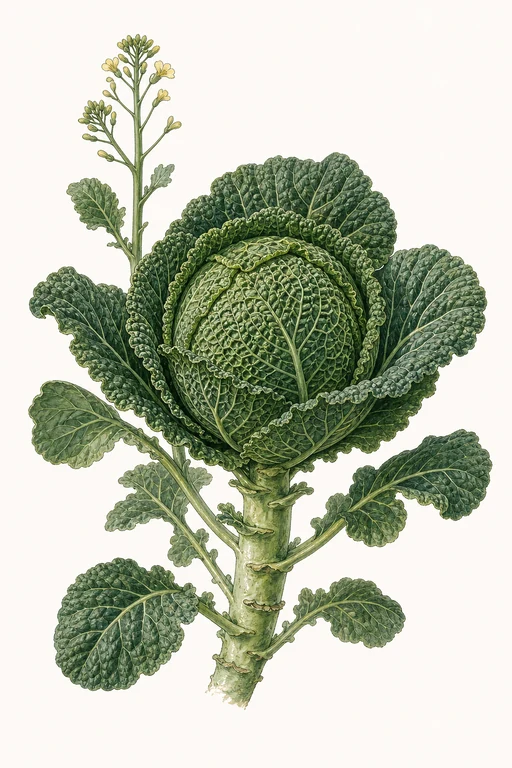
Savoy King
Cabbage
🌱 80d to harvest
Rosette
Crisp, deeply savoyed leaves unfurl into a dense, stately head with a cool, sea-green glow and a pleasantly sweet, cabbage-forwar…
Crop Dates
| Milestone | Date |
|---|---|
| Start Indoors | May 18th |
| Last Frost | Jun 15th |
| Transplant / Sow Outdoors | Jun 15th |
| Harvest Begins | Sep 3rd |
| Harvest Ends | Jul 15th |
Crop Details
| Trait | Value |
|---|---|
| Days to Maturity | 80 |
| Sun Requirements | Full Sun |
| Growth Habit | Rosette |
| Support Needed | None |
| Planting Depth | Normal |
| Germination Temp (°F) | 75 |
| Min Soil Temp (°F) | 45 |
| Min Night Temp (°F) | 32 |
| Harden Off (days) | 6 |
Recommended Companions
Frequently Asked Questions
What pest or disease is most likely on Brassica oleracea var. capitata (Savoy-type cabbage), and how do I control it?
Watch for cabbage worms (imported cabbageworm/diamondback moth larvae) and treat quickly, before holes spread across the leaves. Use row cover right after planting to block adults, and if you see larvae, spray Bacillus thuringiensis (Bt) and reapply according to the label every 5–7 days during active feeding. For disease, keep foliage dry and improve airflow to reduce downy mildew/black rot risk—remove and discard infected outer leaves promptly.
How often should I water Savoy-type cabbage during the main growing phase?
During head formation (roughly mid-growth through the last 3–4 weeks), keep soil consistently evenly moist but not waterlogged. Aim for about 1–1.5 inches (2.5–3.8 cm) of water per week total, increasing during hot spells, and water at the base so leaves stay dry. If the soil surface dries 1–2 inches down, it’s time to water again.
How can I tell when Savoy King cabbage is ready to harvest?
Harvest when heads feel firm to the touch and have reached the typical size for your planting spacing, usually around 80 days from sowing/transplanting timing. The outer leaves may look slightly fuller and the head should not easily compress when you gently squeeze it. Cut the head with a sharp knife, leaving a few outer leaves to protect the curd, and harvest before prolonged heavy rain periods to reduce splitting.