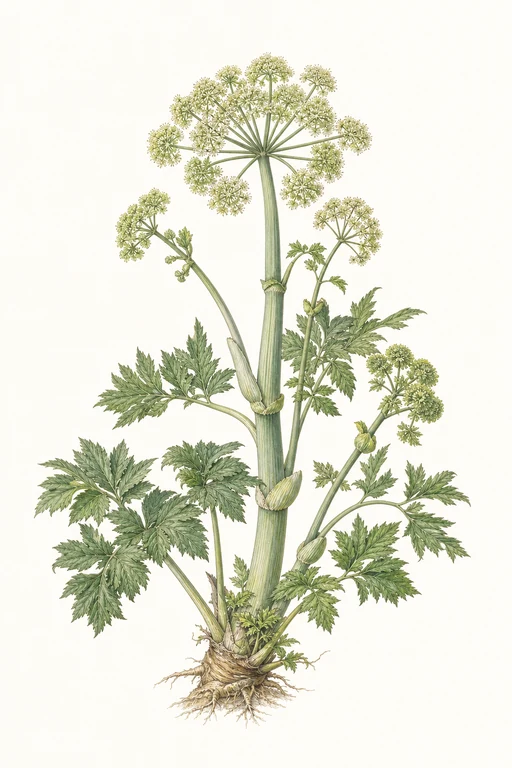
Angelica Archangelica
Angelica
🌱 365d to harvest
Upright
Fragrant, honeyed-green stems rise with a luminous, almost candied perfume—Angelica Archangelica is the herb that turns a garden …
Crop Dates
| Milestone | Date |
|---|---|
| Start Indoors | Direct Sow |
| Last Frost | Jun 1st |
| Transplant / Sow Outdoors | Jun 1st |
| Harvest Begins | Jun 1st |
| Harvest Ends | Aug 1st |
Crop Details
| Trait | Value |
|---|---|
| Days to Maturity | 365 |
| Sun Requirements | Part Sun |
| Growth Habit | Upright |
| Support Needed | Stake |
| Planting Depth | Normal |
| Germination Temp (°F) | 60 |
| Min Soil Temp (°F) | 50 |
| Min Night Temp (°F) | 35 |
| Harden Off (days) | Not Required |
Recommended Companions
Frequently Asked Questions
Why are my Angelica plants getting powdery white spots, and what should I do?
Powdery mildew often shows up as a white, floury coating on angelica leaves, especially with warm days and cooler nights or crowded plants. Cut off the worst leaves, thin so air can circulate, and water at the soil line (not overhead). If it keeps spreading, spray a labeled potassium bicarbonate or sulfur product, and repeat according to the label after 5–7 days.
How often should I water Angelica during the main growing season so the soil stays right?
During active growth, keep the top 2–3 inches of soil evenly moist—typically about 1 inch of water per week total from rain plus irrigation, adjusted for heat and wind. Water deeply when the surface begins to dry, but don’t let the soil sit soggy, since angelica can suffer root problems in waterlogged beds. Mulch lightly around plants to stabilize moisture without smothering the crowns.
How can I tell when Angelica (365 days) is ready to harvest?
Harvest timing depends on what you’re taking: leaves and stems can be taken once plants have formed a vigorous crown and multiple healthy leaf stalks. For roots, wait until the end of the first growing season (about 9–12 months) when plants are tall and mature and growth is starting to slow. The root is ready when it lifts with firm, well-developed flesh and the plant shows late-season decline rather than fresh, actively expanding growth.