
Ashmead's Kernel
Apple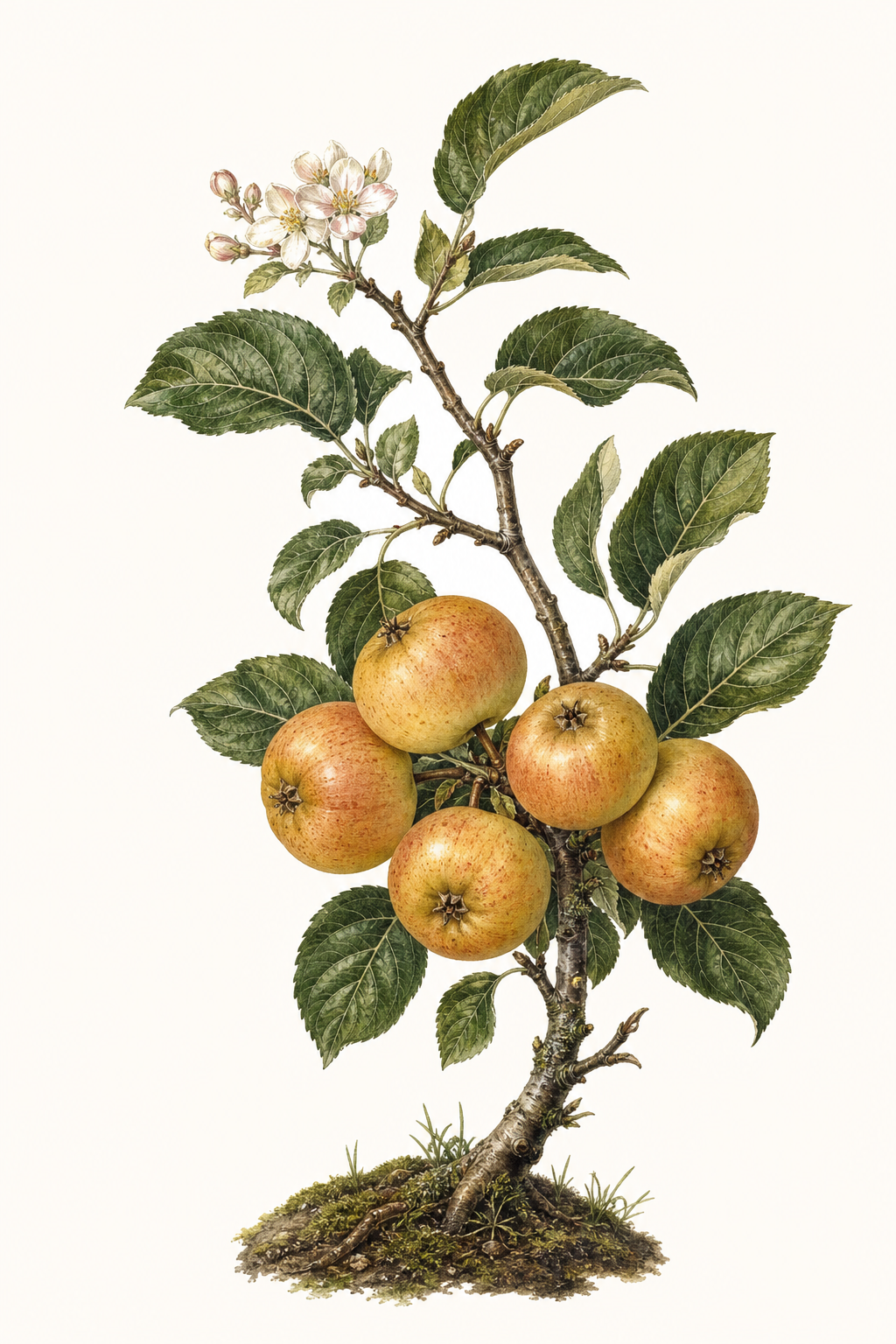
Fragrant, honeyed apple flesh meets a crisp, fine-grained bite in Ashmead’s Kernel—an heirloom favorite prized for its rich, arom…
Crop Dates
| Milestone | Date |
|---|---|
| Start Indoors | Direct Sow |
| Last Frost | Jun 1st |
| Transplant / Sow Outdoors | Jun 1st |
| Harvest Begins | Jun 1st |
| Harvest Ends | Aug 1st |
Crop Details
| Trait | Value |
|---|---|
| Days to Maturity | 365 |
| Sun Requirements | Full Sun |
| Growth Habit | Shrub |
| Support Needed | None |
| Planting Depth | Normal |
| Germination Temp (°F) | 60 |
| Min Soil Temp (°F) | 50 |
| Min Night Temp (°F) | 30 |
| Harden Off (days) | Not Required |
Frequently Asked Questions
How do I manage powdery mildew on Ashmead’s Kernel apples?
How often should I water Ashmead’s Kernel during the main growing season?
When is Ashmead’s Kernel ready to harvest and how can I tell?
Fragrant, honeyed apple flesh meets a crisp, fine-grained bite in Ashmead’s Kernel—an heirloom favorite prized for its rich, aromatic character. The fruit develops a warm blush over a golden base, with a tender snap and a distinctly sweet-tart balance that shines in orchard-fresh moments and turns beautifully to preserves and spiced preparations. Grow it for a season-long sense of anticipation: a classic apple that rewards patience with depth of flavor and a beautifully polished, old-world look.
Sowing Tips

Transplant Conditions
Wait until soil reaches 50°F and nights stay above 30°F before moving outdoors.
Expert Note

For best results, plant apple trees in full sun and choose disease-resistant rootstocks; aim for spring planting as soon as soil is workable or fall planting where winters are mild.