SproutSmart
SproutSmart Intelligent Garden Sowing

Asparagus Bean

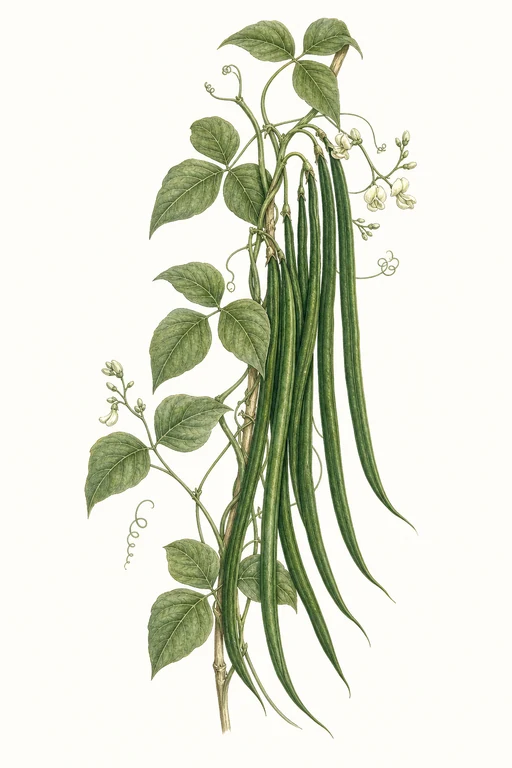
Botanical illustration of Asparagus Bean
🌱 60d to harvest Clumping

Tender, ribbon-long pods unfurl with a silken snap and a delicately sweet, green-bean flavor that feels bright and fresh from the…

Planting Schedule

Add Asparagus Bean to your garden to build a schedule and get reminders.

Crop Dates

MilestoneDate
Start IndoorsDirect Sow
Last FrostJun 1st
Transplant / Sow OutdoorsJun 1st
Harvest BeginsJul 31st
Harvest EndsAug 1st

Crop Details

TraitValue
Days to Maturity60
Sun RequirementsFull SunFull sun
Growth HabitClumping
Support NeededTrellis
Planting DepthNormal
Germination Temp (°F)70
Min Soil Temp (°F)60
Min Night Temp (°F)55
Harden Off (days)Not Required

Frequently Asked Questions


What pest or disease commonly affects Vigna sesquipedalis (asparagus bean), and how do I control it?
Asparagus bean is often hit by aphids and leaf-feeding caterpillars, which can stunt growth and reduce pod quality. Check plants 2–3 times per week and spray aphids off with a strong water jet, then use insecticidal soap if they rebound; for caterpillars, hand-pick and apply Bacillus thuringiensis (Bt) when larvae are small. Avoid overhead watering to reduce fungal leaf issues, and remove heavily affected leaves early to slow spread.
How often should I water Vigna sesquipedalis during the main growing phase?
During pod production, keep the soil evenly moist but not waterlogged—aim for watering when the top 1 inch of soil feels dry. In hot weather, this usually means about 1 inch of water per week total (split into 2 waterings if needed to prevent drying between them). Mulch after plants establish to stabilize moisture and help prevent pod stress from drying out.
How can I tell when Vigna sesquipedalis is ready to harvest?
Harvest pods when they’re young and tender—typically around 60 days from sowing—before seeds inside noticeably swell. Pick pods every 2–3 days once harvest starts, when pods are long but still snap easily and feel firm rather than tough. If pods get stringy or hard to puncture with a fingernail, they’re past peak and will slow further production.
Botanical illustration of Asparagus Bean

Tender, ribbon-long pods unfurl with a silken snap and a delicately sweet, green-bean flavor that feels bright and fresh from the garden. Asparagus Bean forms long, slender pods that stay crisp and pleasantly succulent at maturity, making them ideal for quick roasting, stir-fry-style sautéing, and vibrant fresh use in salads; the pods also shine in savory sauces and pickling for a tangy bite. Grow for a steady harvest over weeks—each new pod is a promise of tender texture and garden-fresh flavor.

Sowing Tips

Transplant Conditions

Wait until soil reaches 60°F and nights stay above 55°F before moving outdoors.

Expert Note

For best yields, sow when soil is consistently warm and keep moisture steady—long-podded beans form pods quickly once they start flowering.