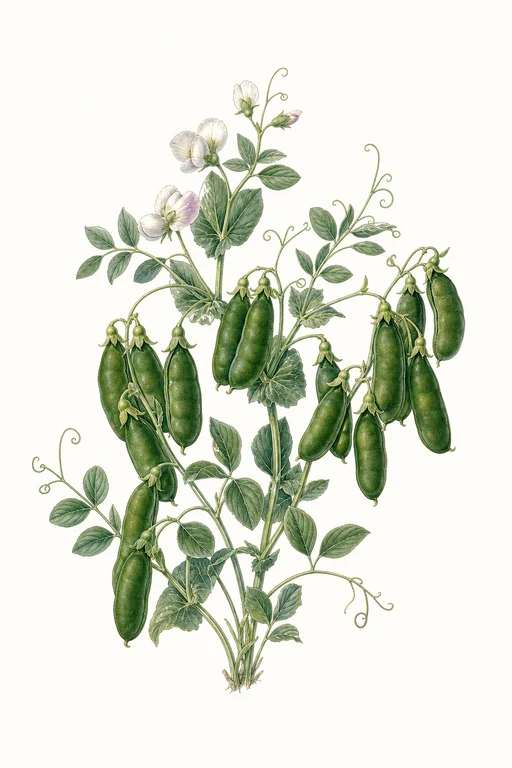
Austrian Winter
Pea
🌱 50d to harvest
Upright
Sweetly fragrant and richly green, Austrian Winter peas form a dense, velvety cover that feels as good as it looks—tender pods an…
Crop Dates
| Milestone | Date |
|---|---|
| Start Indoors | Direct Sow |
| Last Frost | Jun 1st |
| Transplant / Sow Outdoors | Jun 1st |
| Harvest Begins | Jul 21st |
| Harvest Ends | Aug 1st |
Crop Details
| Trait | Value |
|---|---|
| Days to Maturity | 50 |
| Sun Requirements | Full Sun |
| Growth Habit | Upright |
| Support Needed | Trellis |
| Planting Depth | Normal |
| Germination Temp (°F) | 45 |
| Min Soil Temp (°F) | 40 |
| Min Night Temp (°F) | 28 |
| Harden Off (days) | Not Required |
Recommended Companions
Frequently Asked Questions
Why are my Austrian Winter squash leaves developing powdery white patches and how do I stop it?
Powdery mildew often shows up on older leaves as a white, dusty coating and can spread quickly in warm, dry weather with poor airflow. Remove and discard badly infected leaves, then spray foliage with a homemade baking-soda mix (1 tablespoon baking soda + 1/2 teaspoon liquid soap per gallon of water) every 7–10 days as needed. Space plants for airflow and avoid wetting leaves during watering to slow new infections.
How often should I water Austrian Winter during the main growing phase to keep it from cracking or stalling?
During active vine growth and fruit set, water deeply about 1–2 times per week, aiming for evenly moist soil to a depth of 6–8 inches. Let the top 1 inch of soil dry slightly between waterings, then water thoroughly—consistent moisture helps prevent fruit stress. Reduce watering slightly once fruits are fully sized to avoid watery, weak growth and to help skins cure as maturity approaches.
How can I tell when Austrian Winter squash is ready to harvest at about 50 days?
Harvest when the rind is fully tough (you can’t easily puncture it with a fingernail) and the stem has started to dry and harden. The squash color should be uniform for the variety and the fruit should feel heavy for its size. Cut with a sharp knife leaving a 2–3 inch stem; curing starts immediately after harvest for best storage.