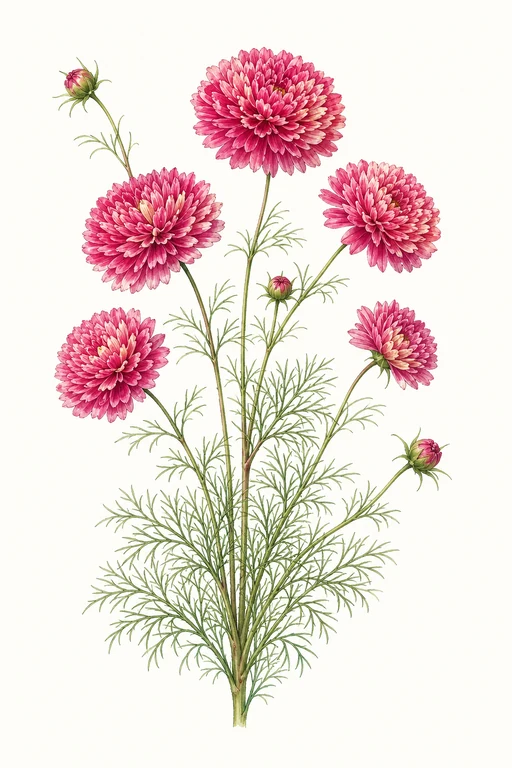
Double Click
70d to harvest
Velvety, petal-bright blooms open like confetti against airy green—Double Click delivers a lush, fully double cosmos that feels almost plush at first glance. Expect rich color with a dense, layered rosette of petals and a graceful, upright habit that holds its charm from bud to bloom, making it a standout in bouquets and garden beds alike. Grow it for long-lasting showy flowers that sway with the breeze and invite repeated admiration all season long.
Crop Dates
Growing note: Zone 1b has only 61 frost-free days — shorter than this crop's 70-day maturity. Outdoor planting is not viable; use protected cultivation.
| Milestone | Date |
|---|---|
| Last Frost | Jun 1st |
| Growing Approach | Protected Environment Only |
Crop Details
| Trait | Value |
|---|---|
| Days to Maturity | 70 |
| Sun Requirements | Full Sun |
| Growth Habit | Upright |
| Support Needed | None |
| Planting Depth | Surface |
| Germination Temp (°F) | 70 |
| Min Soil Temp (°F) | 55 |
| Min Night Temp (°F) | 45 |
| Harden Off (days) | 7 |
Recommended Companions
Frequently Asked Questions
What pest or disease commonly affects Cosmos bipinnatus (double click cosmos), and how can I control it?
A frequent problem is powdery mildew, which shows up as a white, dusty coating on leaves during warm, humid spells. Improve airflow by spacing plants (or thinning seedlings) and water the soil rather than the foliage; remove heavily infected leaves to slow spread. If mildew is recurring, use a labeled sulfur or potassium bicarbonate spray per the product directions, starting as soon as you see the first patches.
How do I know when Cosmos bipinnatus is ready to harvest?
Harvest for cut flowers when the outer petals are fully opened and the center disc is mature but not yet dried out. If you’re harvesting seed, let flowers fully dry on the plant until the seed heads turn tan/brown and feel crisp, then collect the dry seeds. Cosmos typically reaches maturity in about 70 days, but harvest timing is best judged by flower opening stage (for blooms) or seed-head dryness (for seed).