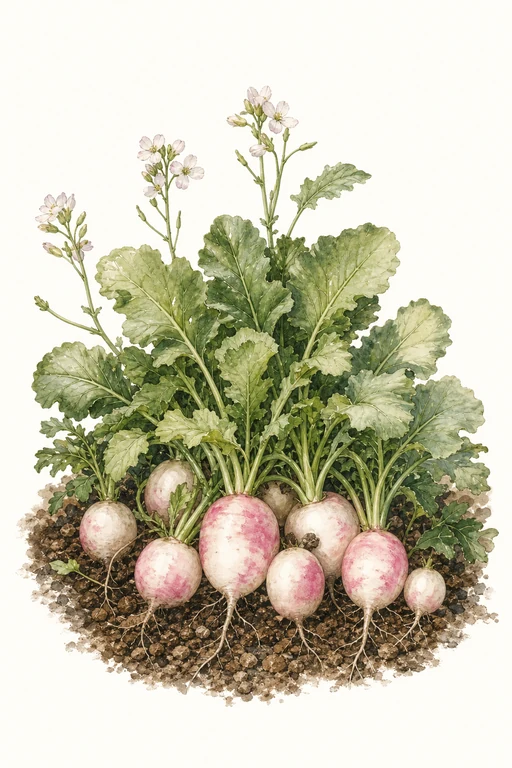
Easter Egg
Radish
🌱 25d to harvest
Rosette
Crisp as a fresh spring morning, ‘Easter Egg’ radish charms with a candy-bright, egg-shaped mix of white and soft pastel blushes …
Crop Dates
| Milestone | Date |
|---|---|
| Start Indoors | Direct Sow |
| Last Frost | Jun 1st |
| Transplant / Sow Outdoors | Jun 1st |
| Harvest Begins | Jun 26th |
| Harvest Ends | Aug 1st |
Crop Details
| Trait | Value |
|---|---|
| Days to Maturity | 25 |
| Sun Requirements | Full Sun |
| Growth Habit | Rosette |
| Support Needed | None |
| Planting Depth | Surface |
| Germination Temp (°F) | 55 |
| Min Soil Temp (°F) | 40 |
| Min Night Temp (°F) | 32 |
| Harden Off (days) | Not Required |
Recommended Companions
Frequently Asked Questions
How do I manage powdery mildew or downy mildew on Raphanus sativus (Easter Egg radish)?
Raphanus sativus commonly develops mildew when foliage stays wet and air movement is poor. Water in the morning and avoid overhead watering so leaves dry quickly, and thin seedlings to reduce crowding. If you see mildew spreading, remove the worst-affected leaves and improve airflow; for home beds, use a labeled sulfur-based fungicide early and follow the product directions exactly.
How often should I water Easter Egg radish during the 25-day main growing period?
Keep the soil consistently evenly moist—not soggy—especially from germination through bulb swelling (about days 5–20). In warm spells, plan on watering about 1 inch per week total, split into 2–4 smaller waterings to prevent drying out between rounds. Let the top 1/2 inch dry slightly, then water thoroughly, because irregular moisture can cause woody, pithy roots and faster bolting.
What are the signs that Easter Egg radish (Raphanus sativus) is ready to harvest?
Harvest when the radish roots reach their expected size—typically around day 25—while they’re still crisp and tender. Look for a visible shoulder pushing up at the soil surface and gently pull one to check diameter; if it feels large but still firm and smooth, it’s ready. Don’t leave radishes in the ground too long after sizing up, or they become spongy and hotter-tasting as they mature.