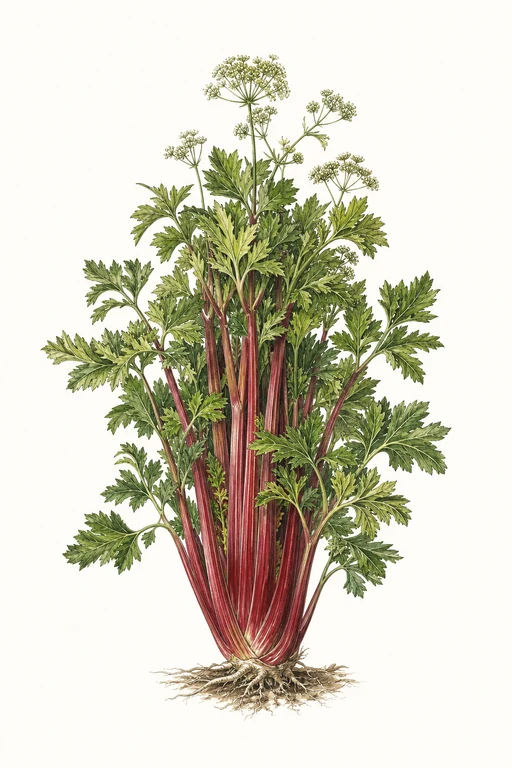
Giant Red
80d to harvest
Sink your senses into Giant Red’s richly colored stalks, where deep garnet-red ribs rise with a crisp, refreshing snap and a clean, bright bite. At maturity, the plants form bold, upright clumps with substantial, well-blanched texture that holds its integrity in the garden and shines in classic celery preparations—ideal for roasting, simmering into savory bases, and adding vivid color to sauces and pickles.
Crop Dates
Growing note: Zone 1b has only 61 frost-free days — shorter than this crop's 80-day maturity. Outdoor planting is not viable; use protected cultivation.
| Milestone | Date |
|---|---|
| Last Frost | Jun 1st |
| Growing Approach | Protected Environment Only |
Crop Details
| Trait | Value |
|---|---|
| Days to Maturity | 80 |
| Sun Requirements | Part Sun |
| Growth Habit | Upright |
| Support Needed | None |
| Planting Depth | Normal |
| Germination Temp (°F) | 70 |
| Min Soil Temp (°F) | 45 |
| Min Night Temp (°F) | 28 |
| Harden Off (days) | 7 |
Recommended Companions
Frequently Asked Questions
What pest or disease most commonly affects Swiss chard (Beta vulgaris var. cicla) and how do I control it?
Watch for leafminers and aphids, which can leave stippled or curled leaves; inspect the undersides regularly. Remove heavily affected leaves and spray aphids with a strong stream of water, then use insecticidal soap if needed. For disease, keep leaves dry and improve airflow to reduce leaf spot and downy mildew—avoid overhead watering and remove yellowing/spotty foliage promptly.
How often should I water Swiss chard during the main growing phase (until harvest at ~80 days)?
Keep the soil consistently evenly moist, aiming for about 1 inch (2.5 cm) of water per week, increasing to 2–3 inches in hot, windy weather. Water at the base so the leaves stay dry, and check that the top 1–2 inches of soil are moist but not soggy. If growth slows or leaf stems become tough, increase watering frequency rather than just adding more water at once.