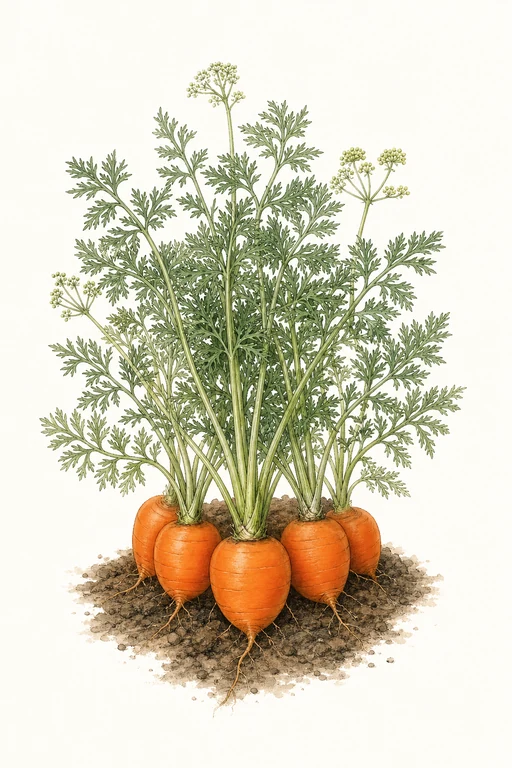
Parisienne
70d to harvest
Sweet as spun sugar with a crisp, tender snap, Parisienne baby carrots arrive in a neat, uniform size that’s as satisfying to hold as it is to savor. Their flavor is bright and mellow—never woody—paired with a fine, smooth texture that roasts to caramel-kissed edges and shines in fresh bowls, quick pickles, and vibrant sauces. A gardener’s delight at 70 days, Parisienne rewards careful thinning with a harvest that looks as refined as it tastes.
Crop Dates
Growing note: Zone 1b has only 61 frost-free days — shorter than this crop's 70-day maturity. Outdoor planting is not viable; use protected cultivation.
| Milestone | Date |
|---|---|
| Last Frost | Jun 1st |
| Growing Approach | Protected Environment Only |
Crop Details
| Trait | Value |
|---|---|
| Days to Maturity | 70 |
| Sun Requirements | Full Sun |
| Growth Habit | Taproot |
| Support Needed | None |
| Planting Depth | Surface |
| Germination Temp (°F) | 70 |
| Min Soil Temp (°F) | 45 |
| Min Night Temp (°F) | 28 |
| Harden Off (days) | Not Required |
Recommended Companions
Frequently Asked Questions
What’s the most common pest or disease problem for Daucus carota (carrot) and how do I treat it?
Watch for carrot rust fly (eggs on soil near plants; larvae tunnel into roots) and fungal leaf spots in damp weather. Use row cover right after sowing and keep it on until roots are well established, then remove covers on dry, clear days for access. If leaf spots appear, water at the soil line and thin plants for airflow; remove badly infected foliage promptly to slow spread.
How often should I water Parisienne carrots during their main growing phase?
During active root bulking (roughly weeks 4–10), keep the soil evenly moist but not waterlogged—aim for about 1 inch (2.5 cm) of water per week split into 1–2 waterings. Let the top 1–2 cm (0.5–1 in) dry slightly between waterings to prevent rot, then water deeply enough to reach the developing roots.
How can I tell when Parisienne carrots are ready to harvest?
Start checking around day 60–70 by gently pulling a sample and looking for a firm, well-colored root that matches the variety’s small, slender shape. The shoulders should be clearly formed at the soil surface, and roots should feel solid rather than rubbery. Harvest promptly when ready; leaving them too long can lead to tougher roots and more cracking.