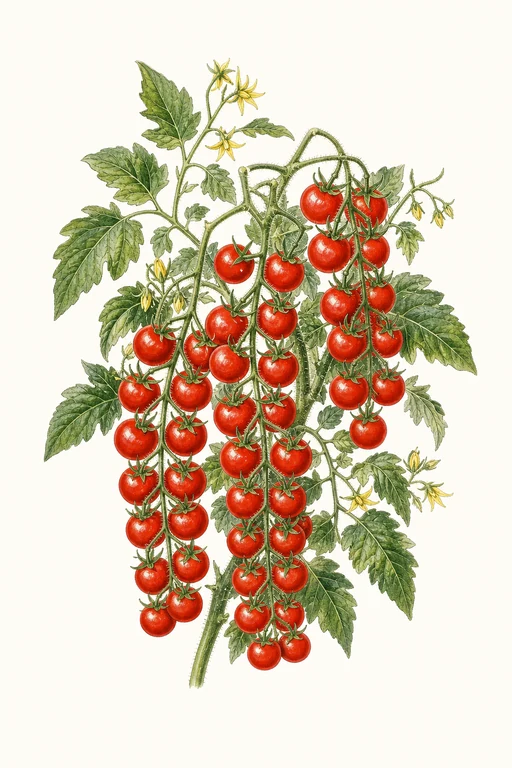
Sweet 100
60d to harvest
Sun-warmed sweetness bursts from Sweet 100’s abundant clusters of petite fruits—bright, glossy scarlet spheres that taste like summer in a single bite. The skin is delightfully thin and resilient, giving way to a juicy, seed-filled interior with a crisp snap and a balanced, candy-like flavor. Grow Sweet 100 for fresh garden snacking and vibrant salads, or for spoonable sauces that shine with concentrated tomato brightness.
Crop Dates
| Milestone | Date |
|---|---|
| Start Indoors | Apr 13th |
| Last Frost | Jun 1st |
| Transplant / Sow Outdoors | Jul 27th |
| Harvest Begins | Sep 25th |
| Harvest Ends | Aug 1st |
Crop Details
| Trait | Value |
|---|---|
| Days to Maturity | 60 |
| Sun Requirements | Full Sun |
| Growth Habit | Indeterminate |
| Support Needed | Stake |
| Planting Depth | Deep |
| Germination Temp (°F) | 70 |
| Min Soil Temp (°F) | 60 |
| Min Night Temp (°F) | 50 |
| Harden Off (days) | 9 |
Recommended Companions
Frequently Asked Questions
What pests or diseases commonly hit Solanum lycopersicum (Sweet 100) and how can I control them at home?
Watch closely for tomato hornworms and aphids; check the undersides of leaves weekly and remove hornworms by hand, then spray aphids with a strong jet of water. For disease, manage early blight (brown spots with yellow margins) by removing infected lower leaves and watering at the soil line instead of wetting foliage. If blight keeps spreading, use an appropriate labeled fungicide for tomatoes and rotate products to avoid resistance.
How often should I water Sweet 100 tomatoes during the main fruiting phase?
During active flowering and fruiting, keep soil evenly moist with about 1–1.5 inches (2.5–4 cm) of water per week, split into 2–3 sessions if the weather is hot. Aim for steady moisture—irregular watering can trigger blossom-end rot and fruit cracking—so the top few inches dry slightly between waterings but the root zone doesn’t dry out. Mulch around the plants to stabilize moisture and reduce swings.