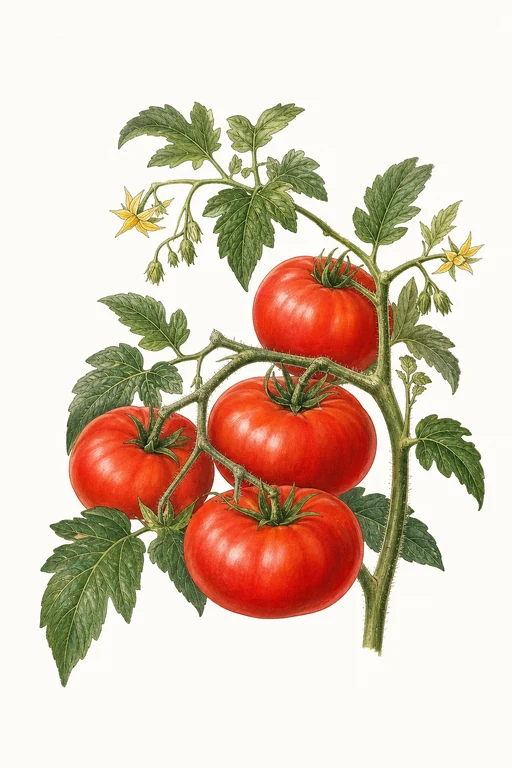
Valencia
75d to harvest
Sun-warmed and richly aromatic, Valencia tomatoes ripen to a vivid, classic red with a smooth, satin skin that feels firm yet yielding at first touch. The flesh is juicy and well-balanced—meaty for slicing, with a bright, tangy sweetness that shines in fresh salads and shines again in bold sauces. Grow Valencia for dependable, midseason harvests that deliver beautifully uniform slices for everyday table favorites.
Crop Dates
Growing note: Zone 1b has only 61 frost-free days — shorter than this crop's 75-day maturity. Outdoor planting is not viable; use protected cultivation.
| Milestone | Date |
|---|---|
| Last Frost | Jun 1st |
| Growing Approach | Protected Environment Only |
Crop Details
| Trait | Value |
|---|---|
| Days to Maturity | 75 |
| Sun Requirements | Full Sun |
| Growth Habit | Determinate |
| Support Needed | Cage |
| Planting Depth | Deep |
| Germination Temp (°F) | 70 |
| Min Soil Temp (°F) | 60 |
| Min Night Temp (°F) | 50 |
| Harden Off (days) | 10 |
Recommended Companions
Frequently Asked Questions
What’s a common disease or pest problem for Valencia peanuts (Arachis hypogaea) and how do I manage it?
Watch for peanut leaf spot (a fungal disease) and caterpillars early in the season. Keep plants spaced for airflow, water at the soil line (not the leaves), and remove heavily spotted foliage as soon as you notice it. If you see persistent leaf-spotting, use a labeled fungicide for peanuts and repeat according to the label, especially during humid spells.
How often should I water Valencia peanuts during the main growing phase?
During flowering and pod fill (roughly mid-season through most of the 75 days), keep soil consistently moist but not soggy—aim for the top 1–2 in (2–5 cm) to dry slightly between waterings. In full sun, this often means watering about 1–2 times per week depending on your soil, with a deep soak so moisture reaches pod depth. Avoid waterlogging, which increases rotting and poor pod development.