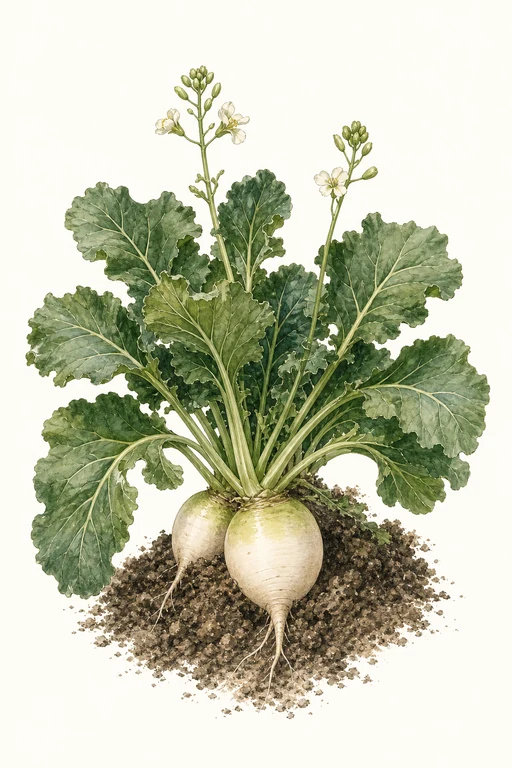
Winter Radish
60d to harvest
Winter Radish offers a crisp, clean bite with a pleasantly peppery edge that mellows beautifully as the season cools. At maturity, the roots develop a firm, juicy texture and a striking, store-worthy presence—ideal for keeping on hand when fresh garden flavors are most welcome. Grow it for hearty winter salads, robust slaws, and boldly flavored pickles that showcase its bright radish character.
Crop Dates
| Milestone | Date |
|---|---|
| Start Indoors | Direct Sow |
| Last Frost | Jun 1st |
| Transplant / Sow Outdoors | Jun 1st |
| Harvest Begins | Jul 31st |
| Harvest Ends | Aug 1st |
Crop Details
| Trait | Value |
|---|---|
| Days to Maturity | 60 |
| Sun Requirements | Full Sun |
| Growth Habit | Rosette |
| Support Needed | None |
| Planting Depth | Normal |
| Germination Temp (°F) | 55 |
| Min Soil Temp (°F) | 45 |
| Min Night Temp (°F) | 28 |
| Harden Off (days) | Not Required |
Recommended Companions
Frequently Asked Questions
What is the most common pest or disease problem for Raphanus sativus (winter radish), and how do I treat it?
A frequent issue is clubroot caused by soil-borne pathogens that deform and club the roots. To reduce risk, don’t plant brassicas in the same bed for several years, keep soil pH slightly higher with lime if your soil is acidic, and remove badly infected plants immediately to limit spread. For early prevention, incorporate clean compost and avoid overwatering, since consistently wet soil favors many root problems.
How often should I water winter radish during the main growing phase to keep roots developing well?
During active root bulking (roughly weeks 3–8 after sowing), keep the top 1–2 inches of soil evenly moist, not soggy. For most home gardens, that typically means watering about 1 inch per week total, split into 1–3 sessions depending on heat and rainfall. If the soil swings from dry to wet, roots can become fibrous or pithy—so water steadily, and mulch lightly to stabilize moisture.