
Bengal
Snake Gourd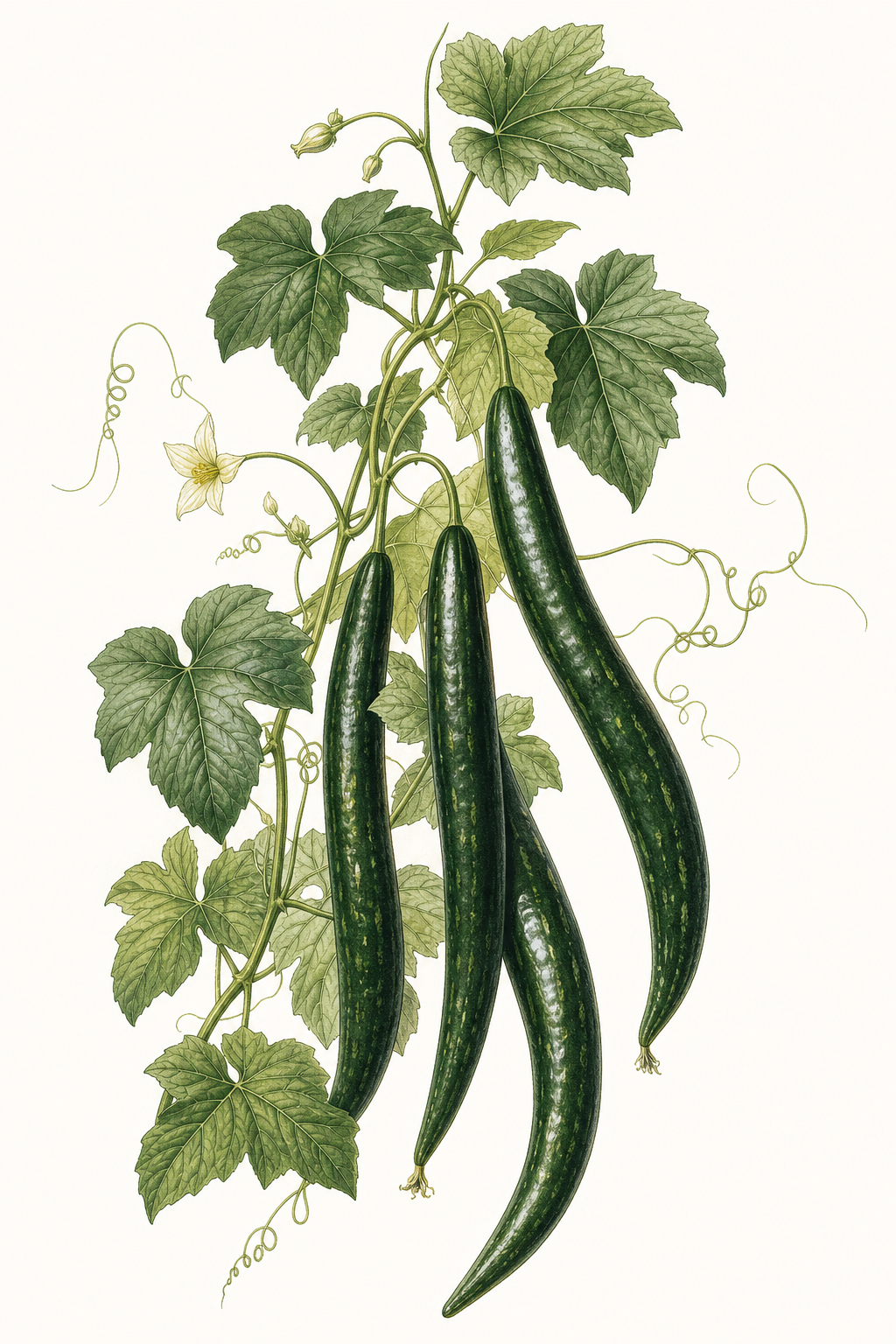
Bengal snake gourd unfurls with a glossy, dark-green skin that catches the light like polished lacquer, then rewards with a cool,…
Crop Dates
| Milestone | Date |
|---|---|
| Start Indoors | May 25th |
| Last Frost | May 25th |
| Transplant / Sow Outdoors | Jun 8th |
| Harvest Begins | Aug 17th |
| Harvest Ends | Aug 29th |
Crop Details
| Trait | Value |
|---|---|
| Days to Maturity | 70 |
| Sun Requirements | Full Sun |
| Growth Habit | Vine |
| Support Needed | Trellis |
| Planting Depth | Normal |
| Germination Temp (°F) | 80 |
| Min Soil Temp (°F) | 65 |
| Min Night Temp (°F) | 55 |
| Harden Off (days) | 10 |
Recommended Companions
Frequently Asked Questions
What pest or disease most commonly affects Lagenaria siceraria (snake gourd), and what should I do first?
How often should I water Lagenaria siceraria during the main growing phase?
How can I tell when my Bengal (Lagenaria siceraria) is ready to harvest?
Bengal snake gourd unfurls with a glossy, dark-green skin that catches the light like polished lacquer, then rewards with a cool, crisp bite and tender, mild flavor. At maturity the fruit reaches a long, gently tapered silhouette—ideal for turning into silky, spoonable creations, or enjoying fresh for its refreshing crunch. Grow Bengal for a steady harvest rhythm around day 70, when the vines feel most alive and the gourds look their very best.
Sowing Tips

Transplant Conditions
Wait until soil reaches 65°F and nights stay above 55°F before moving outdoors. Harden off for 10 days first.

Direct Sow Preferred
Sensitive roots — does not transplant well. If starting indoors, use biodegradable pots and disturb roots as little as possible when moving outdoors.
Expert Note

Soak seeds overnight and keep soil warm; for bitter snake gourd, steady watering and full sun help develop the classic flavor.