
Baby Blue Hubbard
Winter Squash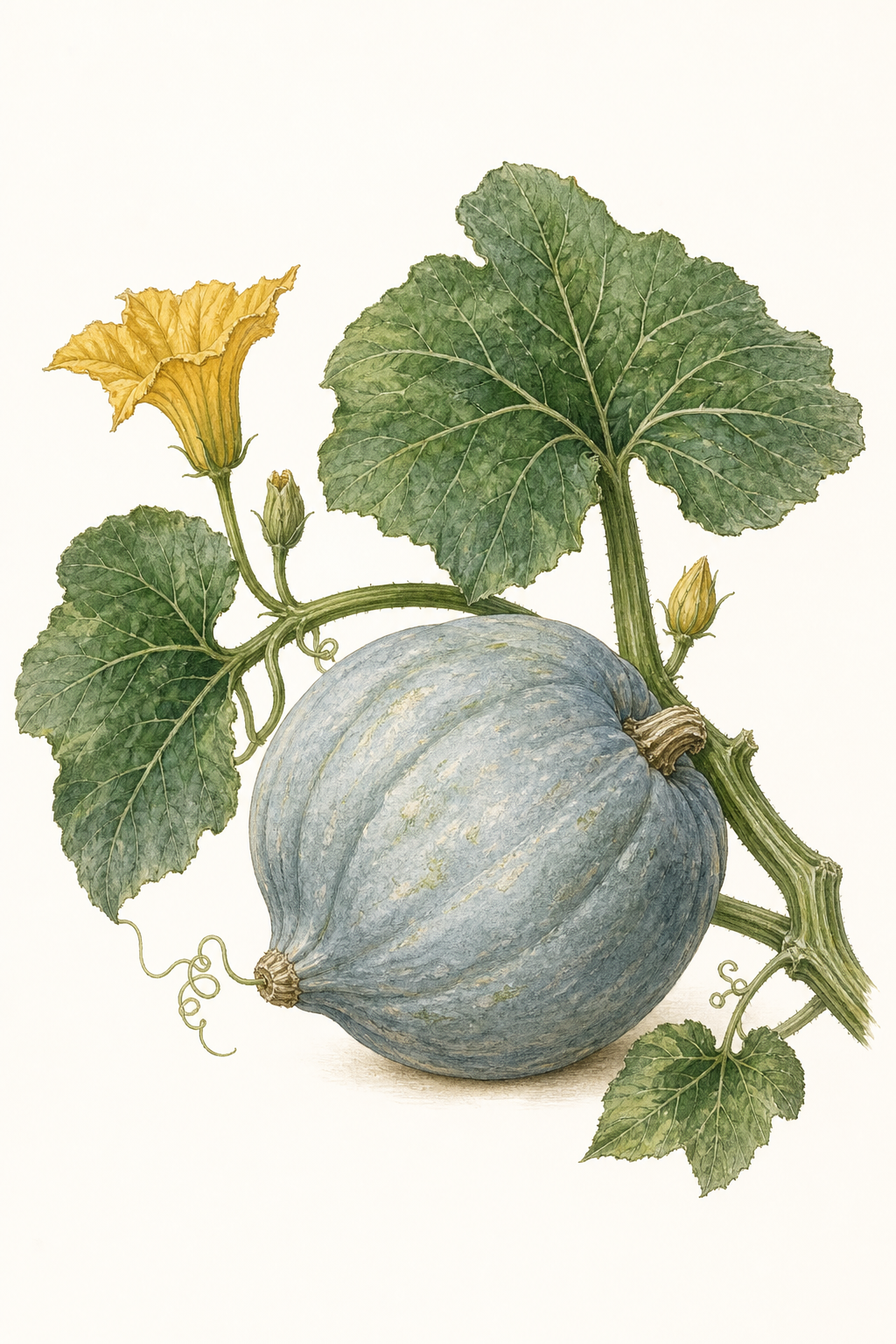
Sweetly aromatic and richly colored, Baby Blue Hubbard brings a cool, misty beauty to the winter garden—its skin a powdery blue-g…
Crop Dates
| Milestone | Date |
|---|---|
| Start Indoors | May 29th |
| Last Frost | May 15th |
| Transplant / Sow Outdoors | Jun 12th |
| Harvest Begins | Sep 15th |
| Harvest Ends | Aug 25th |
Crop Details
| Trait | Value |
|---|---|
| Days to Maturity | 95 |
| Sun Requirements | Full Sun |
| Growth Habit | Vine |
| Support Needed | Trellis |
| Planting Depth | Normal |
| Germination Temp (°F) | 70 |
| Min Soil Temp (°F) | 65 |
| Min Night Temp (°F) | 55 |
| Harden Off (days) | 10 |
Recommended Companions
Frequently Asked Questions
What pest or disease commonly hits Cucurbita maxima (Baby Blue Hubbard) and how can I control it?
How often should I water Baby Blue Hubbard during the main growing phase?
How do I tell when Baby Blue Hubbard is ready to harvest?
Sweetly aromatic and richly colored, Baby Blue Hubbard brings a cool, misty beauty to the winter garden—its skin a powdery blue-gray that deepens with age. Expect dense, fine-grained flesh that turns velvety when roasted, with a naturally sweet, nutty flavor and a spoonable texture that shines in hearty winter preparations. Grow it for dependable storage and for showstopping color that makes every harvest feel like a keepsake.
Sowing Tips

Transplant Conditions
Wait until soil reaches 65°F and nights stay above 55°F before moving outdoors. Harden off for 10 days first.

Direct Sow Preferred
Sensitive roots — does not transplant well. If starting indoors, use biodegradable pots and disturb roots as little as possible when moving outdoors.
Expert Note

Sow/transplant only when nights are reliably warm, then give plants plenty of space for their vine growth even if the fruit is smaller.