
Baby Bubba
Okra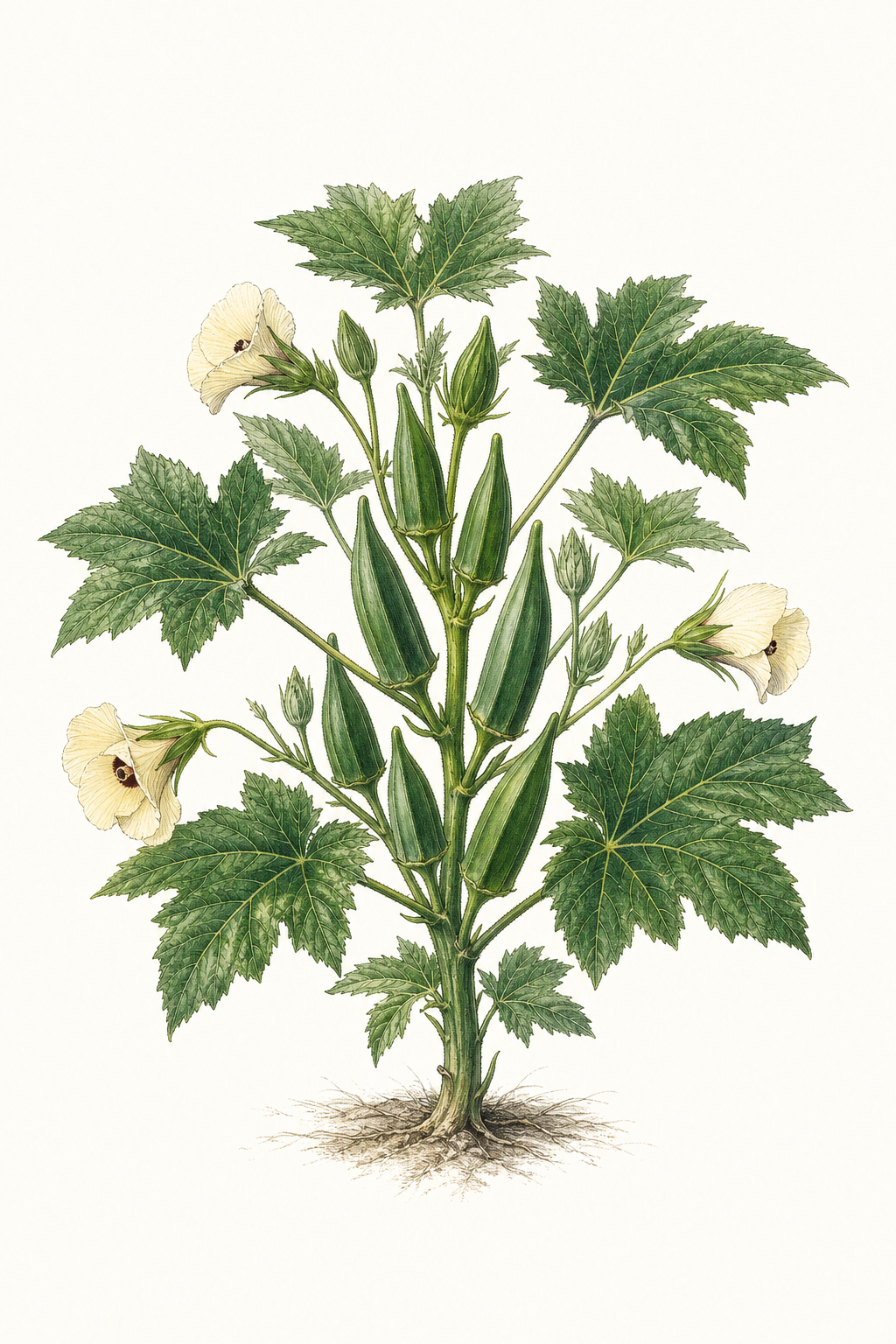
Tender pods of Baby Bubba arrive with a silky, snap-tender bite and a fresh, green sweetness that feels bright from the first har…
Crop Dates
| Milestone | Date |
|---|---|
| Start Indoors | Direct Sow |
| Last Frost | May 15th |
| Transplant / Sow Outdoors | Jun 12th |
| Harvest Begins | Aug 1st |
| Harvest Ends | Aug 25th |
Crop Details
| Trait | Value |
|---|---|
| Days to Maturity | 50 |
| Sun Requirements | Full Sun |
| Growth Habit | Upright |
| Support Needed | None |
| Planting Depth | Normal |
| Germination Temp (°F) | 80 |
| Min Soil Temp (°F) | 65 |
| Min Night Temp (°F) | 55 |
| Harden Off (days) | 10 |
Recommended Companions
Frequently Asked Questions
How do I prevent and treat powdery mildew on Baby Bubba in mid-summer?
How often should I water Baby Bubba during the main growing phase (after plants are established)?
When is Baby Bubba ready to harvest, and how can I tell?
Tender pods of Baby Bubba arrive with a silky, snap-tender bite and a fresh, green sweetness that feels bright from the first harvest. The compact plants produce abundant, baby-sized okra—deeply colored and pleasantly smooth—ideal for quick roasting, vibrant stir-fries, and spoon-ready additions to sauces, stews, and pickles. Grow Baby Bubba for a steady, garden-to-table rhythm of crisp pods and lush, ornamental foliage all season long.
Sowing Tips

Transplant Conditions
Wait until soil reaches 65°F and nights stay above 55°F before moving outdoors. Harden off for 10 days first.

Direct Sow Preferred
Sensitive roots — does not transplant well. If starting indoors, use biodegradable pots and disturb roots as little as possible when moving outdoors.
Expert Note

For best container performance, keep okra evenly moist and avoid chilling—transplant only when nights are consistently warm and the soil is near 65°F+.