
Blenheim Orange Melon
Melon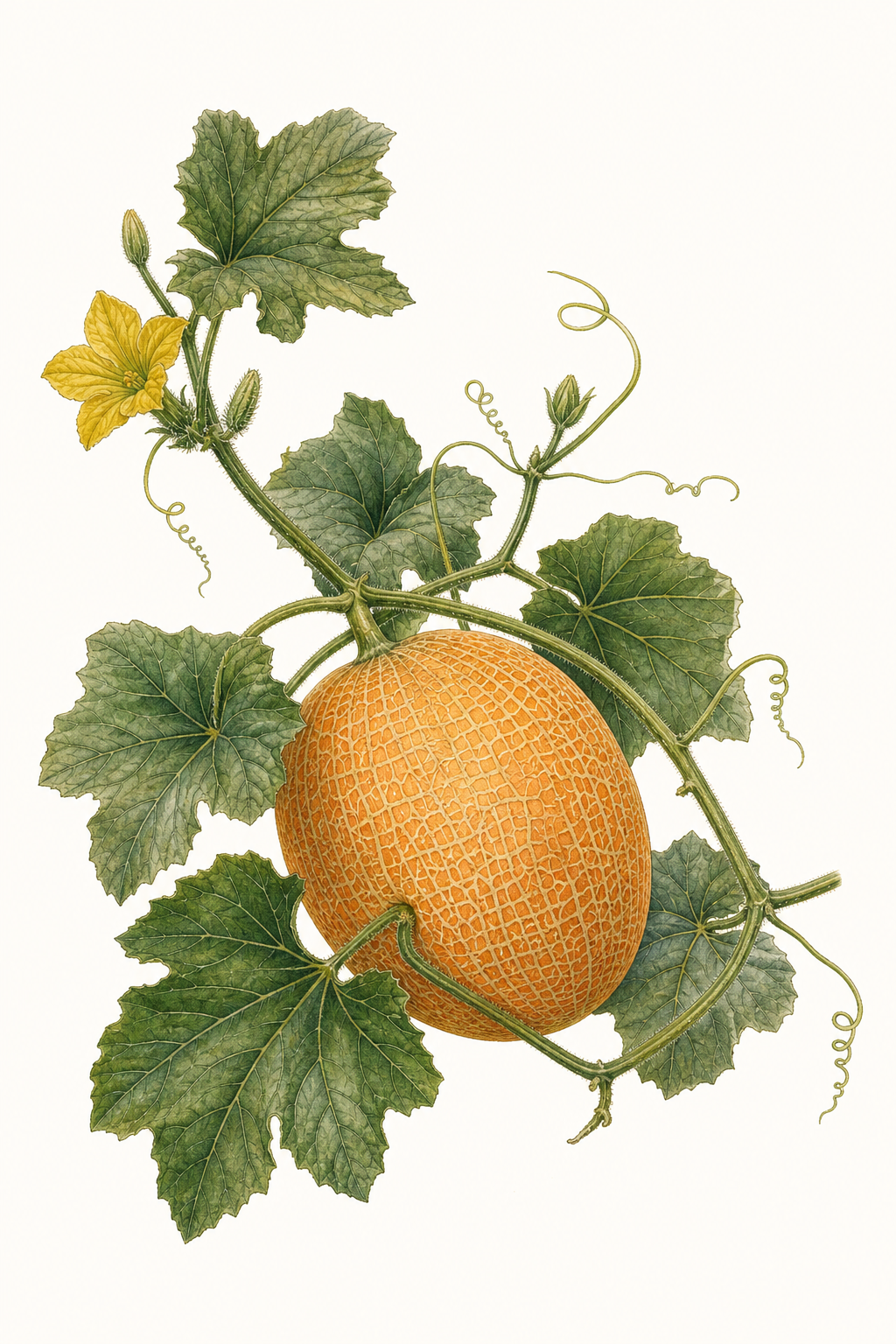
Sun-warmed and fragrant, Blenheim Orange Melon ripens to a glowing, salmon-orange flesh that tastes richly sweet with a bright, h…
Crop Dates
| Milestone | Date |
|---|---|
| Start Indoors | May 22nd |
| Last Frost | May 15th |
| Transplant / Sow Outdoors | Jun 5th |
| Harvest Begins | Aug 29th |
| Harvest Ends | Aug 25th |
Crop Details
| Trait | Value |
|---|---|
| Days to Maturity | 85 |
| Sun Requirements | Full Sun |
| Growth Habit | Vine |
| Support Needed | Trellis |
| Planting Depth | Normal |
| Germination Temp (°F) | 75 |
| Min Soil Temp (°F) | 65 |
| Min Night Temp (°F) | 55 |
| Harden Off (days) | 12 |
Recommended Companions
Frequently Asked Questions
What pest or disease is most likely on Cucumis melo (Blenheim Orange Melon), and what should I do?
How often should I water Blenheim Orange Melon during the main growing phase, and what soil moisture should I aim for?
How can I tell when a Blenheim Orange Melon (Cucumis melo) is ready to harvest?
Sun-warmed and fragrant, Blenheim Orange Melon ripens to a glowing, salmon-orange flesh that tastes richly sweet with a bright, honeyed lift. The texture is tender yet pleasantly firm, with a juicy, melt-in-the-mouth bite that shines whether you savor it straight from the garden or fold it into vibrant preserves and refreshing blends. A specialty melon for gardeners who love a showy harvest—85 days from sowing to a truly radiant, market-worthy fruit.
Sowing Tips

Transplant Conditions
Wait until soil reaches 65°F and nights stay above 55°F before moving outdoors. Harden off for 12 days first.

Direct Sow Preferred
Sensitive roots — does not transplant well. If starting indoors, use biodegradable pots and disturb roots as little as possible when moving outdoors.
Expert Note

Warm the planting area (black plastic or low tunnel) and transplant only after soil reaches 65–70°F to keep vines from stalling, then give full sun and consistent moisture while fruits size up.