
Carolina Reaper
Pepper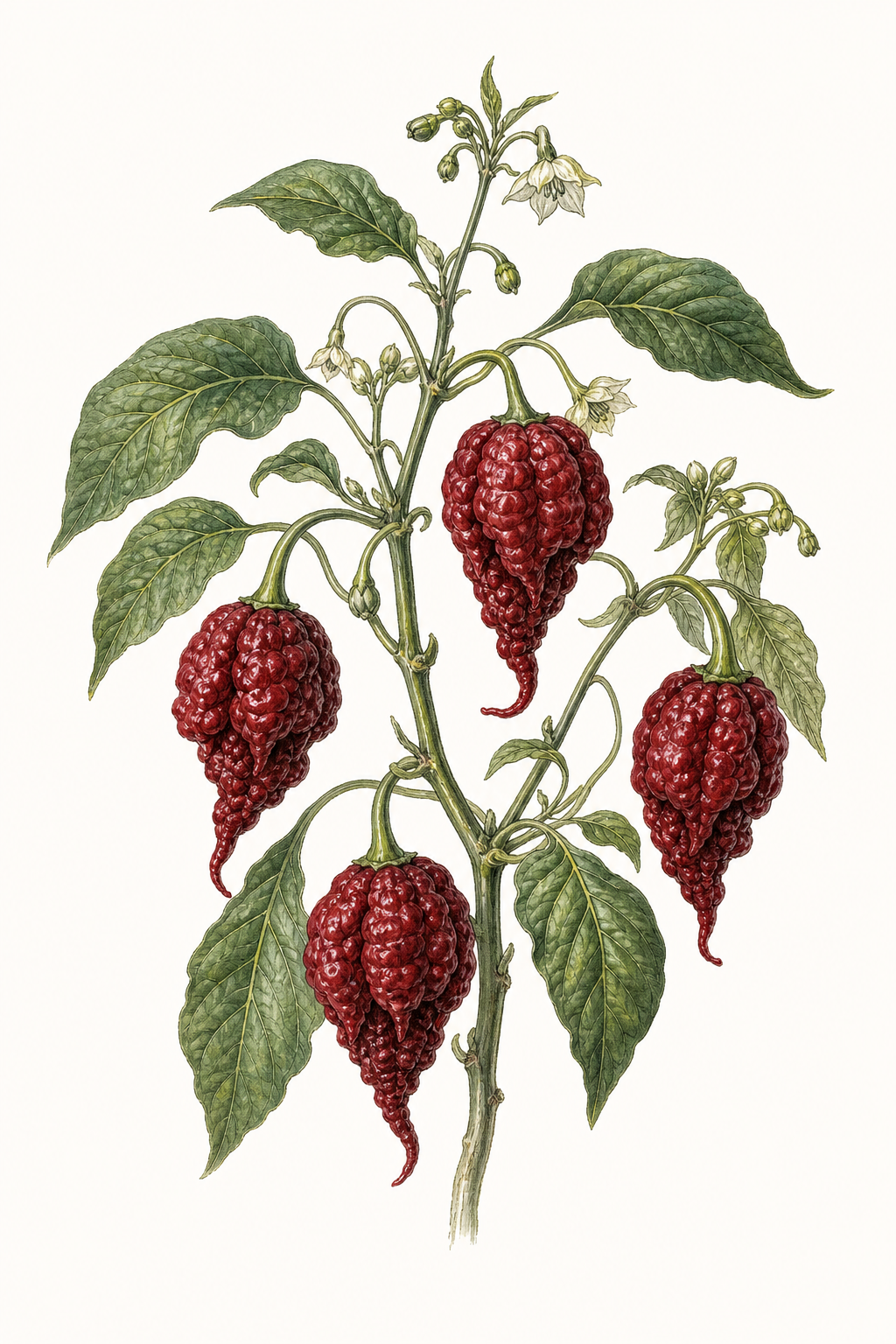
A slow-building blaze with a dramatic first hit of bright peppery heat, followed by a lingering, smoky-sweet intensity—Carolina R…
Crop Dates
| Milestone | Date |
|---|---|
| Start Indoors | Mar 20th |
| Last Frost | May 15th |
| Transplant / Sow Outdoors | Jul 10th |
| Harvest Begins | Dec 7th |
| Harvest Ends | Aug 25th |
Crop Details
| Trait | Value |
|---|---|
| Days to Maturity | 150 |
| Sun Requirements | Full Sun |
| Growth Habit | Upright |
| Support Needed | Stake |
| Planting Depth | Normal |
| Germination Temp (°F) | 85 |
| Min Soil Temp (°F) | 60 |
| Min Night Temp (°F) | 50 |
| Harden Off (days) | 10 |
Recommended Companions
Frequently Asked Questions
What pest or disease is most likely to hit Carolina Reaper (Capsicum chinense), and how do I fix it fast?
How often should I water Carolina Reaper during the main growing phase, and what soil moisture level is ideal?
How can I tell when Carolina Reaper is ready to harvest?
A slow-building blaze with a dramatic first hit of bright peppery heat, followed by a lingering, smoky-sweet intensity—Carolina Reaper delivers the kind of superhot thrill that lingers on the senses. At maturity, the pods form long, knobby spears with a deep, wrinkled surface and a glossy, dark red sheen, offering a crisp snap and unmistakable pungency. Ideal for bold flavor infusions, fiery sauces, and intense pickling-style preparations where you want heat to lead and flavor to follow.
Sowing Tips

Transplant Conditions
Wait until soil reaches 60°F and nights stay above 50°F before moving outdoors. Harden off for 10 days first.
Expert Note

For maximum heat and yield, grow in consistently warm soil (60–70°F+) with steady moisture and high calcium (lime/wood ash where appropriate) while avoiding cold snaps after transplanting.