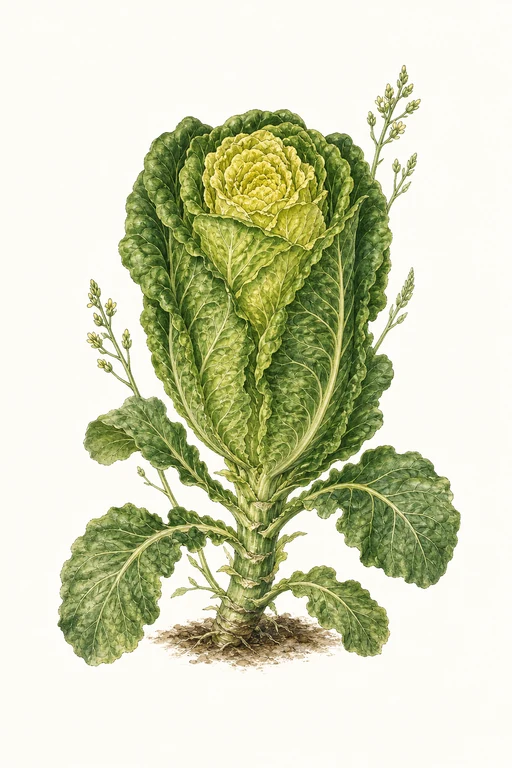
Dragoon
Lettuce
🌱 50d to harvest
Rosette
Crisp, cool-hearted leaves unfurl with a satisfying crunch and a sweet, lightly nutty finish—Dragoon Mini Romaine forms tight, up…
Crop Dates
| Milestone | Date |
|---|---|
| Start Indoors | Apr 17th |
| Last Frost | May 15th |
| Transplant / Sow Outdoors | May 8th |
| Harvest Begins | Jun 27th |
| Harvest Ends | Aug 25th |
Crop Details
| Trait | Value |
|---|---|
| Days to Maturity | 50 |
| Sun Requirements | Part Sun |
| Growth Habit | Rosette |
| Support Needed | None |
| Planting Depth | Normal |
| Germination Temp (°F) | 70 |
| Min Soil Temp (°F) | 40 |
| Min Night Temp (°F) | 35 |
| Harden Off (days) | 6 |
Recommended Companions
Frequently Asked Questions
What pest or disease is most likely on Lactuca sativa (lettuce) and how do I control it at home?
For lettuce, watch closely for downy mildew and aphids, which often show up as yellowing leaves, fuzzy growth under leaves (mildew), or sticky clusters with curled new growth (aphids). Improve airflow by spacing heads/leaves properly and remove badly infected leaves early; then spray aphids off with a strong stream of water and, if needed, use insecticidal soap, targeting the undersides of leaves in the evening. Avoid wetting the foliage because Lactuca sativa is prone to mildew when leaves stay damp.
How often should I water Lactuca sativa during the main growing phase?
During the main growth period (roughly weeks 3–7 toward the ~50-day maturity), keep the soil consistently lightly moist—aim for even moisture without waterlogging. Water when the top 1 inch of soil starts to dry, typically about 1–2 times per week depending on heat and soil type, and water at the base to keep leaves dry. Stress from drying out too long can cause early bitterness and slower head development in Lactuca sativa.
How can I tell when my Lactuca sativa is ready to harvest?
Harvest when plants reach their expected size for your sowing density and the leaves feel full and firm rather than loose and thin. For most lettuce at about 50 days, you’ll see a well-formed rosette/head with outer leaves that can be picked cleanly; avoid waiting until leaves look overly elongated or begin to bolt (rapid stem growth). Taste-test one leaf—if it’s tender and not strongly bitter, it’s ready to cut or pick.