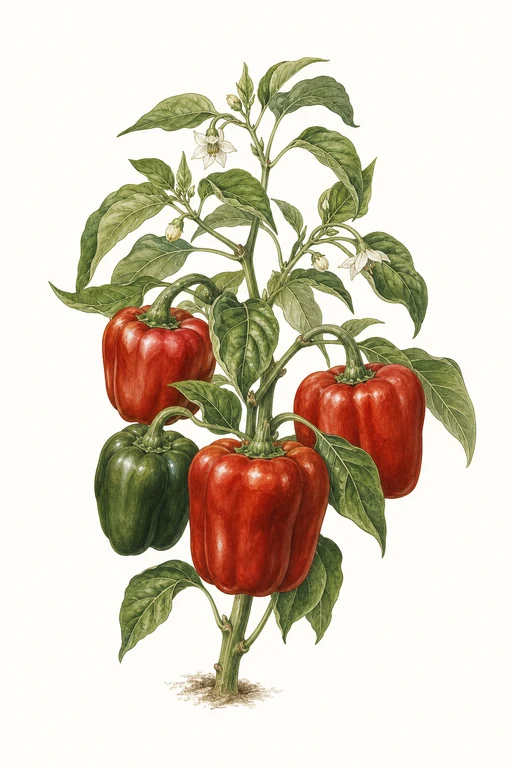
Giant California Wonder
75d to harvest
Sink your senses into Giant California Wonder’s glossy, thick-walled bell peppers, where crisp green turns to a rich, warm red as the fruit swells to impressive size. The flesh is satisfyingly firm with a sweet, mild snap, making these peppers a standout for fresh slicing, roasting, and vibrant sauces that showcase their full-bodied flavor. Grow one plant and enjoy a steady harvest of showy, garden-ready bells that look as good as they taste.
Crop Dates
| Milestone | Date |
|---|---|
| Start Indoors | Mar 20th |
| Last Frost | May 15th |
| Transplant / Sow Outdoors | Jul 10th |
| Harvest Begins | Sep 23rd |
| Harvest Ends | Aug 25th |
Crop Details
| Trait | Value |
|---|---|
| Days to Maturity | 75 |
| Sun Requirements | Full Sun |
| Growth Habit | Bush |
| Support Needed | Stake |
| Planting Depth | Normal |
| Germination Temp (°F) | 80 |
| Min Soil Temp (°F) | 60 |
| Min Night Temp (°F) | 50 |
| Harden Off (days) | 10 |
Recommended Companions
Frequently Asked Questions
What pests or diseases commonly affect Capsicum annuum (Giant California Wonder) and what can I do?
Watch for aphids and hornworms, which can quickly defoliate and damage developing peppers; control aphids with a strong water spray and use hand-removal for hornworms when you spot them. Also monitor for blossom-end rot and leaf spotting—blossom-end rot is driven by irregular watering, so keep soil moisture steady and avoid letting plants dry out between waterings.
How often should I water Giant California Wonder peppers during the main growing phase?
During fruiting, water deeply enough to moisten the root zone, typically about 1–2 times per week depending on heat, aiming for evenly moist (not soggy) soil. Let the top 1 inch of soil dry slightly between waterings, since water stress can trigger blossom-end rot while consistently wet soil encourages root problems.
How do I know when Giant California Wonder (Capsicum annuum) is ready to harvest?
Harvest at about 75 days when the peppers are full-sized and firm, with a glossy appearance and walls that feel substantial. For the classic mature stage, pick when the fruit turns its final color (often green turning to red), since leaving them on too long can reduce firmness and delay new fruit set.