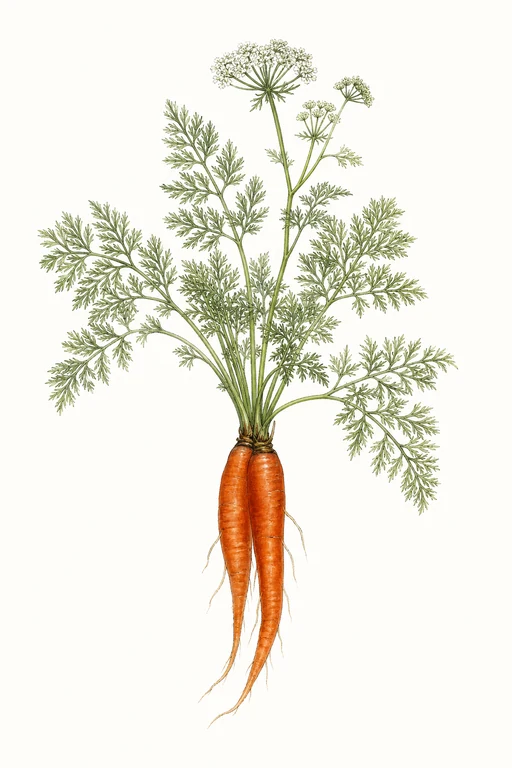
Juane Du Doubs
Carrot
🌱 78d to harvest
Taproot
Sink your senses into Juane Du Doubs—an Imperator carrot that ripens to a rich, sun-warmed orange with a wonderfully crisp, fine-…
Crop Dates
| Milestone | Date |
|---|---|
| Start Indoors | Direct Sow |
| Last Frost | May 15th |
| Transplant / Sow Outdoors | May 15th |
| Harvest Begins | Aug 1st |
| Harvest Ends | Aug 25th |
Crop Details
| Trait | Value |
|---|---|
| Days to Maturity | 78 |
| Sun Requirements | Full Sun |
| Growth Habit | Taproot |
| Support Needed | None |
| Planting Depth | Surface |
| Germination Temp (°F) | 75 |
| Min Soil Temp (°F) | 45 |
| Min Night Temp (°F) | 35 |
| Harden Off (days) | Not Required |
Recommended Companions
Frequently Asked Questions
What pest or disease problem is most common on Daucus carota (carrot) and how do I fix it?
Look for leaf spots and fungal “top” blight that show up as dark, spreading lesions on carrot foliage, especially when the bed stays wet and crowded. Water at the soil line, thin seedlings so leaves aren’t touching, and remove heavily affected foliage to slow spread. If problems persist, apply a labeled copper-based fungicide and rotate away from Apiaceae beds the next season.
How often should I water carrots (Daucus carota) during the main growing phase?
During the 6–10 week root-forming period, keep the top 2–3 inches of soil consistently moist but not soggy—about 1 inch of water per week total, adjusted for heat and rainfall. Water deeply to encourage straight, thick roots, then let the surface begin to dry slightly before watering again. Avoid letting the soil dry out completely and then soaking, which can cause cracking and forked roots.
How can I tell when “Juane Du Doubs” carrots (Daucus carota var. sativus) are ready to harvest?
Start checking around day ~78, when the shoulders of the roots are clearly sized and visible at the soil surface. A good sign is when roots feel firm and have reached the cultivar’s expected thickness; don’t wait for oversized roots, which can get woody. Loosen the soil with a fork and pull by the tops—harvest on a dry day for the least damage.