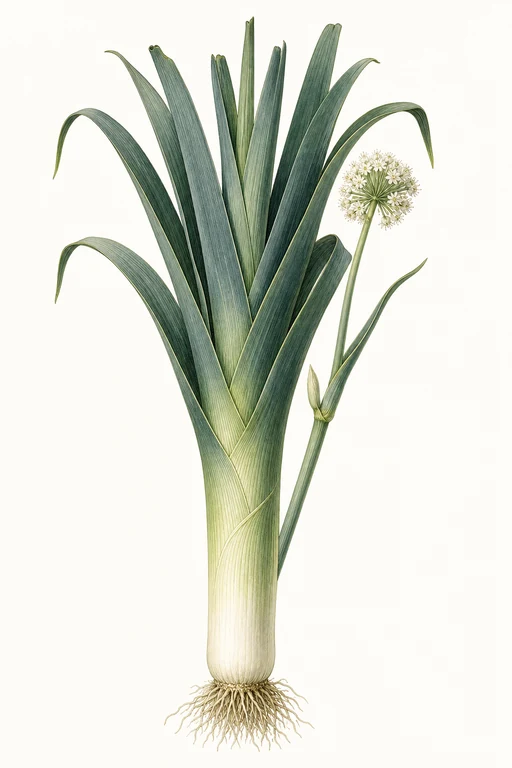
Lexton
Leek
🌱 90d to harvest
Upright
Sweet and quietly bold, Lexton leeks develop a tender, mellow flavor with a clean, green-sweet aroma and a lush, buttery bite. At…
Crop Dates
| Milestone | Date |
|---|---|
| Start Indoors | Mar 6th |
| Last Frost | May 15th |
| Transplant / Sow Outdoors | May 8th |
| Harvest Begins | Aug 6th |
| Harvest Ends | Aug 25th |
Crop Details
| Trait | Value |
|---|---|
| Days to Maturity | 90 |
| Sun Requirements | Full Sun |
| Growth Habit | Upright |
| Support Needed | None |
| Planting Depth | Normal |
| Germination Temp (°F) | 70 |
| Min Soil Temp (°F) | 40 |
| Min Night Temp (°F) | 28 |
| Harden Off (days) | 6 |
Recommended Companions
Frequently Asked Questions
What pest or disease most commonly affects Allium porrum (leek), and how do I treat it at home?
Leeks commonly suffer from leek rust (orange-brown pustules) and onion thrips; both can reduce leaf growth and leave plants looking streaky or dull. Remove and discard infected leaves early, keep airflow high by not crowding plants, and avoid overhead watering so foliage dries quickly. For thrips, use reflective mulch and consider treating young plants with insecticidal soap, reapplying according to label directions as new growth emerges.
How often should I water Allium porrum during the main growing phase, and what soil moisture level should I aim for?
During active growth, keep soil consistently evenly moist—aim for about 1 inch (2.5 cm) of water per week, adjusting for heat and rainfall. Water deeply so moisture reaches the planting depth, but don’t let the soil stay waterlogged, since leeks in saturated soil are more likely to develop rot. A simple test: the top 1–2 inches (2.5–5 cm) should feel slightly damp but not muddy before you water again.
How can I tell when Allium porrum is ready to harvest?
Harvest leeks when they reach full size around 90 days from sowing/transplanting, typically when the white shank is well-developed and firm. Look for a thick, straight stem base (the blanched portion) and healthy, green leaves; if the plant starts to feel hollow or flops easily, it’s usually past its best size. Cut at the soil line with a sharp knife and harvest before significant freezing temperatures.