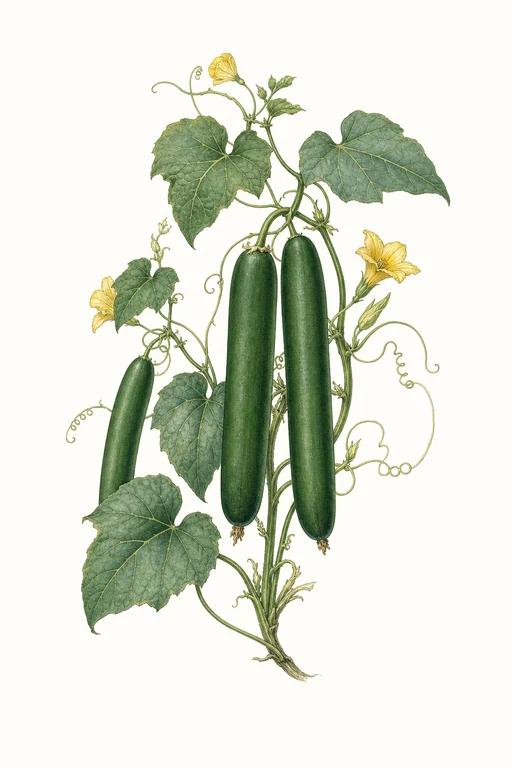
Muncher
50d to harvest
Crisp as chilled glass, Muncher cucumbers deliver a clean, refreshingly mild bite with a distinctly burpless character. At maturity they form straight, dark-green fruits with a smooth, tender skin and an even, satiny crunch—ideal for savoring at peak freshness. Grow Muncher for garden-to-table satisfaction in salads, quick pickles, and bright, no-fuss slices that showcase their gentle flavor.
Crop Dates
| Milestone | Date |
|---|---|
| Start Indoors | May 1st |
| Last Frost | May 15th |
| Transplant / Sow Outdoors | May 15th |
| Harvest Begins | Jul 4th |
| Harvest Ends | Aug 25th |
Crop Details
| Trait | Value |
|---|---|
| Days to Maturity | 50 |
| Sun Requirements | Full Sun |
| Growth Habit | Vine |
| Support Needed | Trellis |
| Planting Depth | Normal |
| Germination Temp (°F) | 70 |
| Min Soil Temp (°F) | 65 |
| Min Night Temp (°F) | 55 |
| Harden Off (days) | 10 |
Recommended Companions
Frequently Asked Questions
Why are my Cucumis sativus (cucumber) leaves getting powdery and what should I do?
Powdery mildew is a common cucumber problem, showing as a white powder on leaves that can spread quickly. Improve airflow by spacing plants properly and removing heavily infected leaves early, then treat with a labeled fungicide (or horticultural sulfur) according to the product directions. Avoid wetting foliage when you water, since damp leaf surfaces speed up mildew development.
How often should I water Cucumis sativus during the main growing phase?
During the main growth and fruiting period, keep the soil consistently moist but not waterlogged—aim for about 1 inch (2.5 cm) of water per week, adjusting for heat and container size. Water deeply at the base so moisture reaches the root zone, and try to avoid long dry gaps that can cause bitter fruit and misshapen cucumbers. Mulch around the plants to reduce moisture swings.