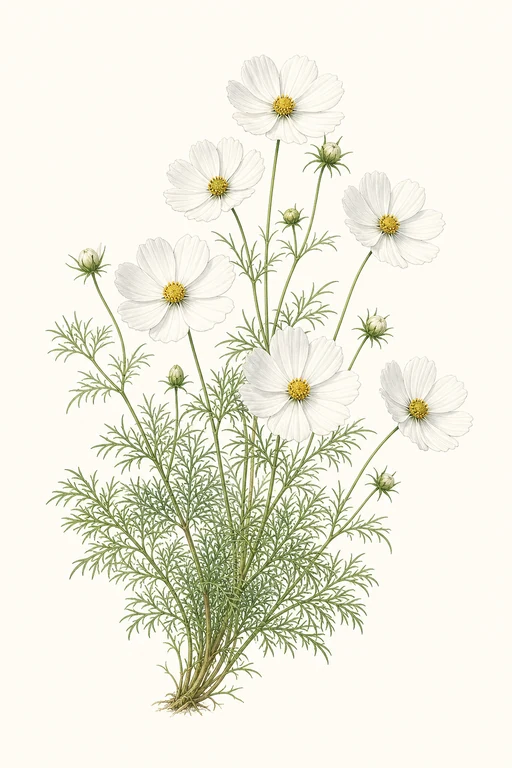
Sonata White
Cosmos
🌱 60d to harvest
Upright
Feathery, cloudlike blooms rise on slender stems in a luminous wash of pure white—cool, crisp, and quietly radiant in the garden.…
Crop Dates
| Milestone | Date |
|---|---|
| Start Indoors | Direct Sow |
| Last Frost | May 15th |
| Transplant / Sow Outdoors | May 15th |
| Harvest Begins | Jul 14th |
| Harvest Ends | Aug 25th |
Crop Details
| Trait | Value |
|---|---|
| Days to Maturity | 60 |
| Sun Requirements | Full Sun |
| Growth Habit | Upright |
| Support Needed | None |
| Planting Depth | Normal |
| Germination Temp (°F) | 75 |
| Min Soil Temp (°F) | 60 |
| Min Night Temp (°F) | 50 |
| Harden Off (days) | Not Required |
Recommended Companions
Frequently Asked Questions
What pest or disease most often affects Cosmos bipinnatus (Sonata White), and what’s the best control at home?
Cosmos bipinnatus commonly gets powdery mildew when nights are cool and humidity stays high, especially with dense foliage. Improve airflow by spacing plants farther and watering at the soil line; remove heavily affected leaves early. If it’s spreading, spray with an at-home horticultural option labeled for powdery mildew and repeat as directed until new growth stays clean.
How often should I water Cosmos bipinnatus during its main growing phase, and what soil moisture level should I aim for?
During active growth (after seedlings establish and before flowering peaks), water deeply about 1–2 times per week so the top few inches dry slightly between waterings. Cosmos bipinnatus tolerates short dry spells, but consistent moisture prevents stressed, leggy growth—avoid soggy soil because it encourages mildew. A simple check: if the top 1–2 inches of soil are dry, water until moisture reaches the root zone.
How can I tell when Sonata White cosmos is ready to harvest (Cosmos bipinnatus)?
Harvest when flowers are fully open and the center florets look crisp and mature—this is typically around 60 days after sowing. Pick blooms early in the day, choosing stems with intact petals (no browning at the edges). For longest vase life and continued flowering, harvest regularly once plants start blooming rather than waiting for seed heads to form.