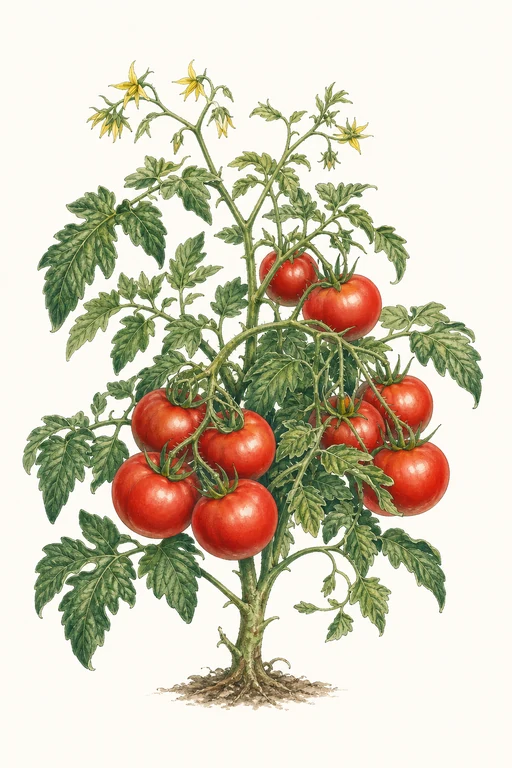
Stupice
Tomato
🌱 60d to harvest
Determinate
Sun-warmed and vividly aromatic, Stupice slicing tomatoes arrive with a bright, classic tomato tang and a juicy, tender bite—firm…
Crop Dates
| Milestone | Date |
|---|---|
| Start Indoors | Mar 27th |
| Last Frost | May 15th |
| Transplant / Sow Outdoors | Jun 26th |
| Harvest Begins | Aug 25th |
| Harvest Ends | Aug 25th |
Crop Details
| Trait | Value |
|---|---|
| Days to Maturity | 60 |
| Sun Requirements | Full Sun |
| Growth Habit | Determinate |
| Support Needed | Cage |
| Planting Depth | Deep |
| Germination Temp (°F) | 75 |
| Min Soil Temp (°F) | 60 |
| Min Night Temp (°F) | 50 |
| Harden Off (days) | 9 |
Recommended Companions
Frequently Asked Questions
What’s the most common disease problem for Solanum lycopersicum (Stupice) and how do I treat it?
Stupice commonly suffers from early blight (Alternaria) and leaf spot, which causes brown spots with darker rings on older leaves. Remove and destroy infected leaves as soon as you see spots, keep foliage as dry as possible by watering at the soil line, and spray a labeled fungicide for tomatoes/early blight when symptoms first appear and repeat as directed. Improve airflow by spacing plants and pruning only lower leaves that touch the ground.
How often should I water Stupice tomatoes during their main growing phase?
During active flowering and fruit set, keep soil evenly moist with about 1–2 inches of water per week, adjusting for heat and rainfall. Water deeply 1–2 times per week rather than lightly daily, and aim to avoid letting the soil dry out completely—dry-to-wet cycles increase blossom-end rot and cracking. Use mulch to steady moisture around the root zone while keeping leaves dry.
How can I tell when my Stupice tomatoes are ready to harvest?
Harvest when fruits have fully colored—bright red (or the cultivar’s ripe color) with slightly softened shoulders—about 60 days after planting under good conditions. Pick regularly once they start ripening to keep plants producing, and handle fruit gently to avoid bruising. If nighttime temperatures are cool, you can harvest at the pink stage and ripen indoors, but fully ripe fruit is best for flavor.