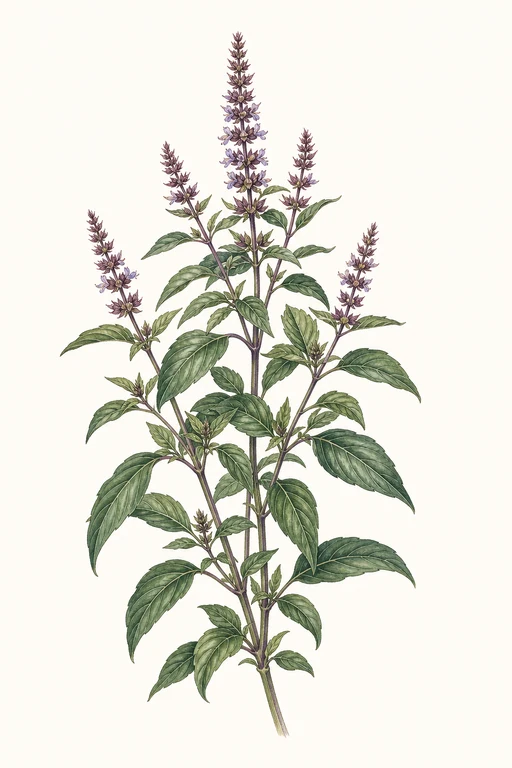
Thai Basil
Basil
🌱 60d to harvest
Upright
Aromatic and vivid from the first pinch—Thai Basil carries a bright, anise-citrus lift with a peppery basil backbone that lingers…
Crop Dates
| Milestone | Date |
|---|---|
| Start Indoors | Apr 3rd |
| Last Frost | May 15th |
| Transplant / Sow Outdoors | Jun 26th |
| Harvest Begins | Aug 25th |
| Harvest Ends | Aug 25th |
Crop Details
| Trait | Value |
|---|---|
| Days to Maturity | 60 |
| Sun Requirements | Full Sun |
| Growth Habit | Upright |
| Support Needed | None |
| Planting Depth | Normal |
| Germination Temp (°F) | 70 |
| Min Soil Temp (°F) | 60 |
| Min Night Temp (°F) | 50 |
| Harden Off (days) | 10 |
Recommended Companions
Frequently Asked Questions
What’s a common pest or disease on Ocimum basilicum (Thai basil) and how do I control it fast?
Downy mildew can affect basil quickly, especially when nights are cool and leaves stay wet; look for yellow patches on top and gray/purple growth on the underside. Remove badly affected leaves immediately, water only at the base (not on foliage), and increase airflow by spacing plants and pruning lightly for an open canopy. If it keeps spreading, use a labeled fungicide for basil/downy mildew and repeat according to the label after 5–7 days.
How often should I water Thai basil during the main growing phase?
During active growth (after plants are established and until harvest), keep soil evenly moist but not soggy—aim for the top 1 inch to dry slightly before watering again. In full sun, this often means watering about 1–2 times per week, but adjust based on heat; hot, windy conditions may require more frequent watering. Always water at soil level to prevent leaf wetness that triggers fungal problems in Ocimum basilicum.
How can I tell when Thai basil is ready to harvest at about 60 days?
Thai basil is ready to start harvesting once plants are well-leafed and have reached roughly 8–12 inches tall (often around day 45–60). Harvest when shoots have developed multiple sets of true leaves; pinch or cut just above a leaf pair to encourage branching. For best flavor, harvest before plants flower—once flower buds form, leaves become tougher and more bitter.