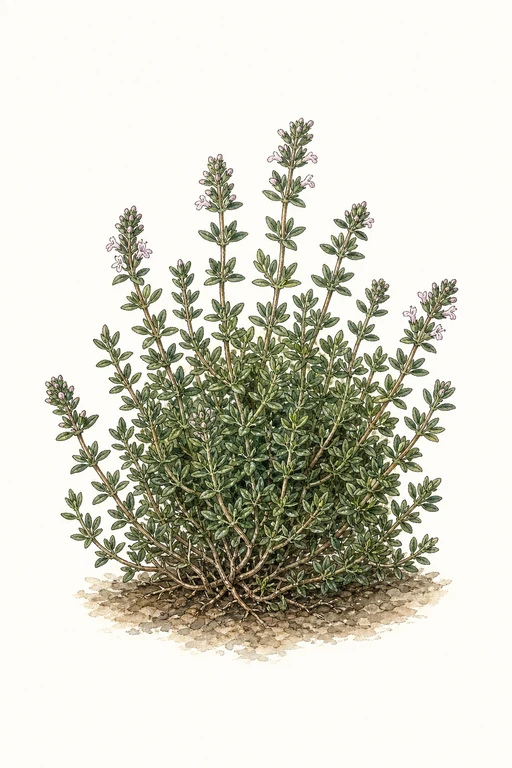
Thymus Vulgaris 'English Thyme
Thyme
🌱 60d to harvest
Upright
Breathe in the unmistakable, sun-warmed fragrance of English Thyme—an herb with a crisp, resinous snap and a softly peppery, herb…
Crop Dates
| Milestone | Date |
|---|---|
| Start Indoors | Apr 24th |
| Last Frost | May 15th |
| Transplant / Sow Outdoors | May 15th |
| Harvest Begins | Jul 14th |
| Harvest Ends | Aug 25th |
Crop Details
| Trait | Value |
|---|---|
| Days to Maturity | 60 |
| Sun Requirements | Full Sun |
| Growth Habit | Upright |
| Support Needed | None |
| Planting Depth | Normal |
| Germination Temp (°F) | 65 |
| Min Soil Temp (°F) | 45 |
| Min Night Temp (°F) | 35 |
| Harden Off (days) | 7 |
Recommended Companions
Frequently Asked Questions
What pest or disease most commonly affects Thymus vulgaris (English thyme), and how can I treat it?
The most common issue is root rot from overly wet, poorly drained soil, often shown by yellowing and sudden dieback. Let the bed dry slightly between waterings, grow in fast-draining soil, and remove any plants that collapse at the crown to prevent spread. For outdoor beds, increase airflow by spacing plants and avoid overhead watering to keep foliage drier.
How often should I water Thymus vulgaris during active growth?
During the main growing phase, water only when the top 1–2 cm (½–¾ in) of soil feels dry, aiming for a deep soak and then allowing the soil to dry again. English thyme (Thymus vulgaris) prefers dry-to-moderately moist conditions; consistently damp soil is what leads to root problems. In hot weather, that may mean watering about once every 7–14 days depending on your drainage and rainfall.
How do I know when English thyme (Thymus vulgaris) is ready to harvest?
Start harvesting around day 60 when the plants are well established and have lots of side growth, not just thin, single stems. Snip sprigs regularly once plants reach roughly 15–20 cm (6–8 in) tall, taking no more than about one-third of the plant at a time to keep it vigorous. Harvest in the morning when the foliage is turgid for the best flavor, and stop heavier harvesting late in the season so new growth can harden off.