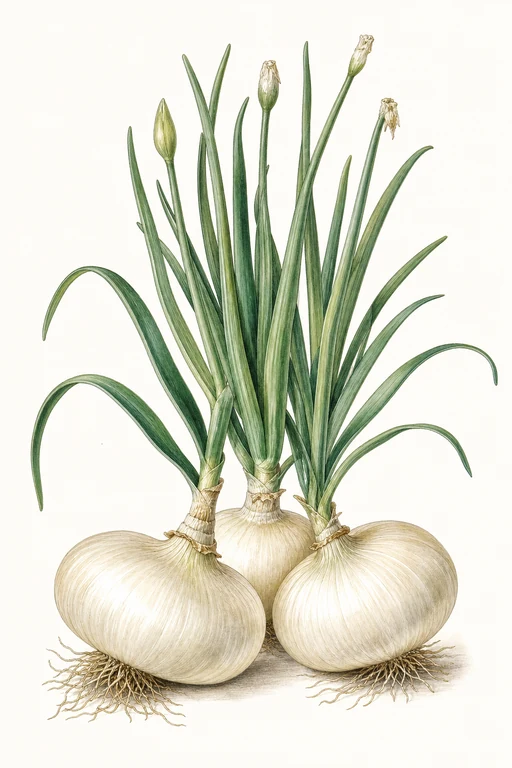
Walla Walla White
Onion
🌱 90d to harvest
Bulbing
Silken-sweet and luminous, Walla Walla White onions open with a gentle, honeyed aroma and a crisp, juicy bite that feels almost o…
Crop Dates
| Milestone | Date |
|---|---|
| Start Indoors | Mar 20th |
| Last Frost | May 15th |
| Transplant / Sow Outdoors | May 15th |
| Harvest Begins | Aug 13th |
| Harvest Ends | Aug 25th |
Crop Details
| Trait | Value |
|---|---|
| Days to Maturity | 90 |
| Sun Requirements | Full Sun |
| Growth Habit | Bulbing |
| Support Needed | None |
| Planting Depth | Normal |
| Germination Temp (°F) | 55 |
| Min Soil Temp (°F) | 45 |
| Min Night Temp (°F) | 28 |
| Harden Off (days) | 7 |
Recommended Companions
Frequently Asked Questions
Why are my Walla Walla White onions showing yellowing leaves and soft bulbs, and what can I do?
Soft, collapsing necks with yellowing leaves are often onion rot caused by excess moisture and poor airflow around the bulb neck. Pull and discard any plants with soft tissue, then avoid watering overhead and water only at the soil line. Improve spacing and keep the bed weed-free so air moves between plants; for prevention, stop watering or reduce sharply as bulbs mature to keep the neck drier.
How often should I water Allium cepa during active bulb growth?
During the main bulb-forming phase (roughly after the plants are established), keep the soil consistently moist but not waterlogged—aim for about 1 inch (2.5 cm) of water per week, adjusted for rain and heat. Water deeply, then let the top 1 inch of soil dry slightly before watering again to avoid bulb rots. Once the bulbs start to bulk and necks begin to tighten, taper watering so the neck stays drier for harvest curing.
When are Walla Walla White onions ready to harvest, and what signs should I look for?
Harvest when about 70–90% of the tops have fallen over and the necks are papery and tight, which for Allium cepa is typically near 90 days. Lift the bulbs gently to avoid bruising, especially because long-keeping quality depends on undamaged skins. Cure them in a dry, airy spot out of direct sun for 1–2 weeks until the outer skins are crisp and the necks are fully dried.