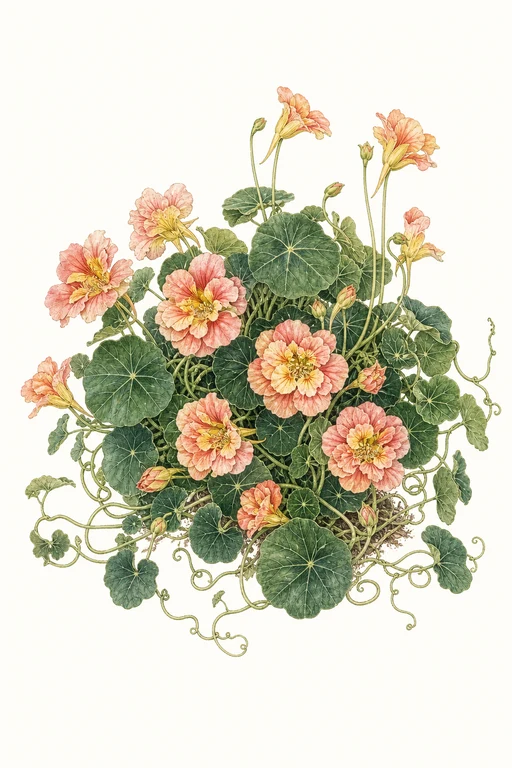
Whirlybird Peach Melba
Nasturtium
🌱 40d to harvest
Spreading
Fragrant, honeyed blossoms unfurl in a whorl of warm peach and buttery gold, each petal edged like a brushstroke—an instant garde…
Crop Dates
| Milestone | Date |
|---|---|
| Start Indoors | Direct Sow |
| Last Frost | May 15th |
| Transplant / Sow Outdoors | May 15th |
| Harvest Begins | Jun 24th |
| Harvest Ends | Aug 25th |
Crop Details
| Trait | Value |
|---|---|
| Days to Maturity | 40 |
| Sun Requirements | Full Sun |
| Growth Habit | Spreading |
| Support Needed | None |
| Planting Depth | Normal |
| Germination Temp (°F) | 70 |
| Min Soil Temp (°F) | 55 |
| Min Night Temp (°F) | 35 |
| Harden Off (days) | Not Required |
Recommended Companions
Frequently Asked Questions
Why are my Tropaeolum majus (nasturtium) plants getting yellow leaves with spots, and how do I stop it?
Yellowing with speckling and leaf spotting on Tropaeolum majus is often caused by fungal leaf spot or bacterial problems worsened by wet foliage. Water at the soil line, keep plants spaced for airflow, and remove the worst affected leaves early. If it keeps spreading, treat with a labeled copper-based bactericide/fungicide and avoid overhead watering for the rest of the season.
How often should I water Tropaeolum majus during active growth in full sun?
During the main growing phase, water deeply only when the top 1 inch of soil feels dry, then let excess drain—nasturtiums dislike staying soggy. In full sun and warm weather, this usually means about every 3–5 days, but less often in cool or rainy spells. Consistently wet soil leads to fewer flowers and more disease, so err on the drier side once established.
How can I tell when my Tropaeolum majus is ready to harvest?
For the classic 40-day crop, start harvesting once flowers and tender leaves are abundant and plants are actively blooming (often around 35–40 days). Pick flowers and young leaves in the morning when they’re crisp, and harvest before they get tough or overly mature. If you also want seed, allow pods to develop until they’re firm and change color, then harvest for drying.