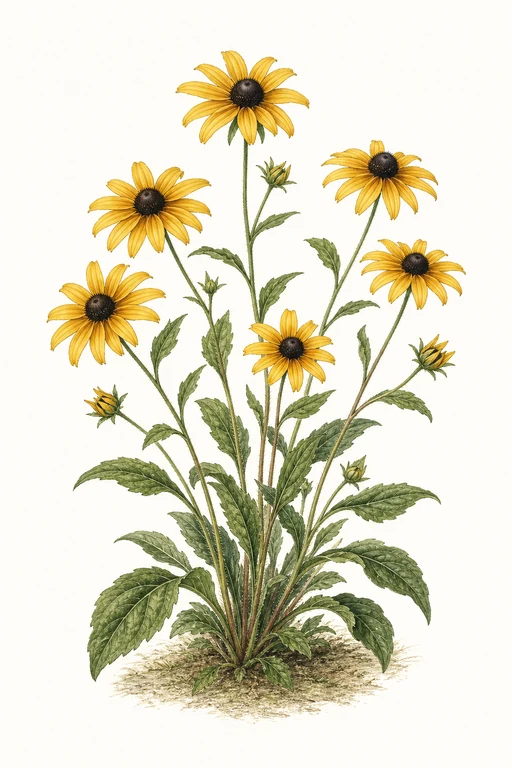
Black-Eyed Susan
60d to harvest
Velvety petals in warm golden amber flare outward from a nearly inky, button-dark center, creating a sunburst bloom that feels luminous even on the calmest days. Black-Eyed Susan forms sturdy, upright clumps with a graceful, airy presence—its flowers hold their shape and texture beautifully as they sway. Grow it for long-lasting garden color in beds and borders, where its bold, high-contrast blooms make a striking statement from early summer into fall.
Crop Dates
| Milestone | Date |
|---|---|
| Start Indoors | Apr 3rd |
| Last Frost | May 15th |
| Transplant / Sow Outdoors | May 15th |
| Harvest Begins | Jul 14th |
| Harvest Ends | Sep 1st |
Crop Details
| Trait | Value |
|---|---|
| Days to Maturity | 60 |
| Sun Requirements | Full Sun |
| Growth Habit | Upright |
| Support Needed | None |
| Planting Depth | Normal |
| Germination Temp (°F) | 70 |
| Min Soil Temp (°F) | 45 |
| Min Night Temp (°F) | 35 |
| Harden Off (days) | 7 |
Recommended Companions
Frequently Asked Questions
How do I prevent and treat powdery mildew on Black-Eyed Susan (Rudbeckia hirta) in humid weather?
Powdery mildew shows up as a white, dusty coating on leaves, usually after warm, humid spells. Improve airflow by spacing plants 12–18 in. apart and watering at the soil line (not the foliage). If it appears, spray with potassium bicarbonate or a labeled fungicide and remove badly affected leaves to slow spread.
How often should I water Black-Eyed Susan during the main growing phase (after seedlings establish)?
Water deeply about 1 inch per week during active growth, then let the top 1–2 in. of soil dry slightly before watering again. In hot, dry weeks you may need 2–3 waterings per week, but always avoid soggy soil since Rudbeckia quickly suffers from root problems. A simple test: if the soil feels dry and crumbly at 1–2 in. down, it’s time to water.