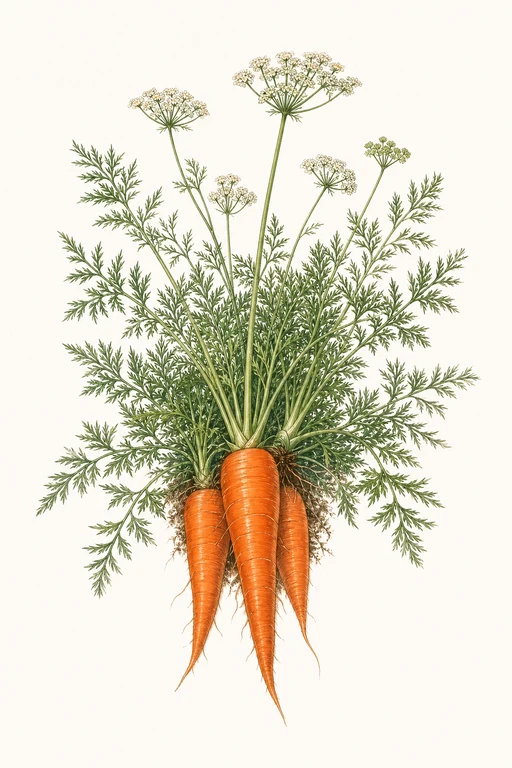
Dragon Carrot
75d to harvest
Sweetly aromatic and vividly colored, Dragon Carrot brings a bold, carrot-top presence with a smooth, crisp bite and a rich, honeyed flavor that shines from the first harvest. True to Danvers type, the roots are deep orange and well-shaped, with a confident taper and tender core that holds its character whether enjoyed fresh or roasted into caramelized sweetness. A standout for gardeners who love dependable performance and a harvest that looks as striking as it tastes.
Crop Dates
| Milestone | Date |
|---|---|
| Start Indoors | Direct Sow |
| Last Frost | May 15th |
| Transplant / Sow Outdoors | May 15th |
| Harvest Begins | Jul 29th |
| Harvest Ends | Sep 1st |
Crop Details
| Trait | Value |
|---|---|
| Days to Maturity | 75 |
| Sun Requirements | Full Sun |
| Growth Habit | Taproot |
| Support Needed | None |
| Planting Depth | Normal |
| Germination Temp (°F) | 75 |
| Min Soil Temp (°F) | 45 |
| Min Night Temp (°F) | 35 |
| Harden Off (days) | Not Required |
Recommended Companions
Frequently Asked Questions
What pest or disease most commonly affects Daucus carota (dragon carrot) and what should I do?
Carrots commonly get Alternaria leaf blight and Cercospora/leaf spots, especially in warm, humid weather. Remove and discard infected tops, avoid wetting the foliage when watering, and improve airflow by spacing plants properly. If spots keep spreading, apply a labeled fungicide for vegetables at the first signs and repeat as directed on the label.
How often should I water dragon carrots during their main growing phase?
During root bulking (roughly weeks 5–10), keep the soil consistently evenly moist but not soggy—aim for about 1 inch of water per week, split into 2–3 waterings if it’s hot or windy. Water deeply enough to reach where the roots are growing, and reduce watering right before harvest to limit cracking.
How can I tell when Daucus carota var. sativus is ready to harvest?
Harvest at about 70–90 days, and start checking earlier around day 75 for the shoulder size you want. Look for the top of the root just above the soil line to fill out and the roots to feel firm rather than flexible; if you see a lot of green at the crown with a well-defined shoulder, it’s ready. Pull one sample carrot first—if the root reaches the expected thickness and color, harvest the rest the same day.