
Kossak
Kohlrabi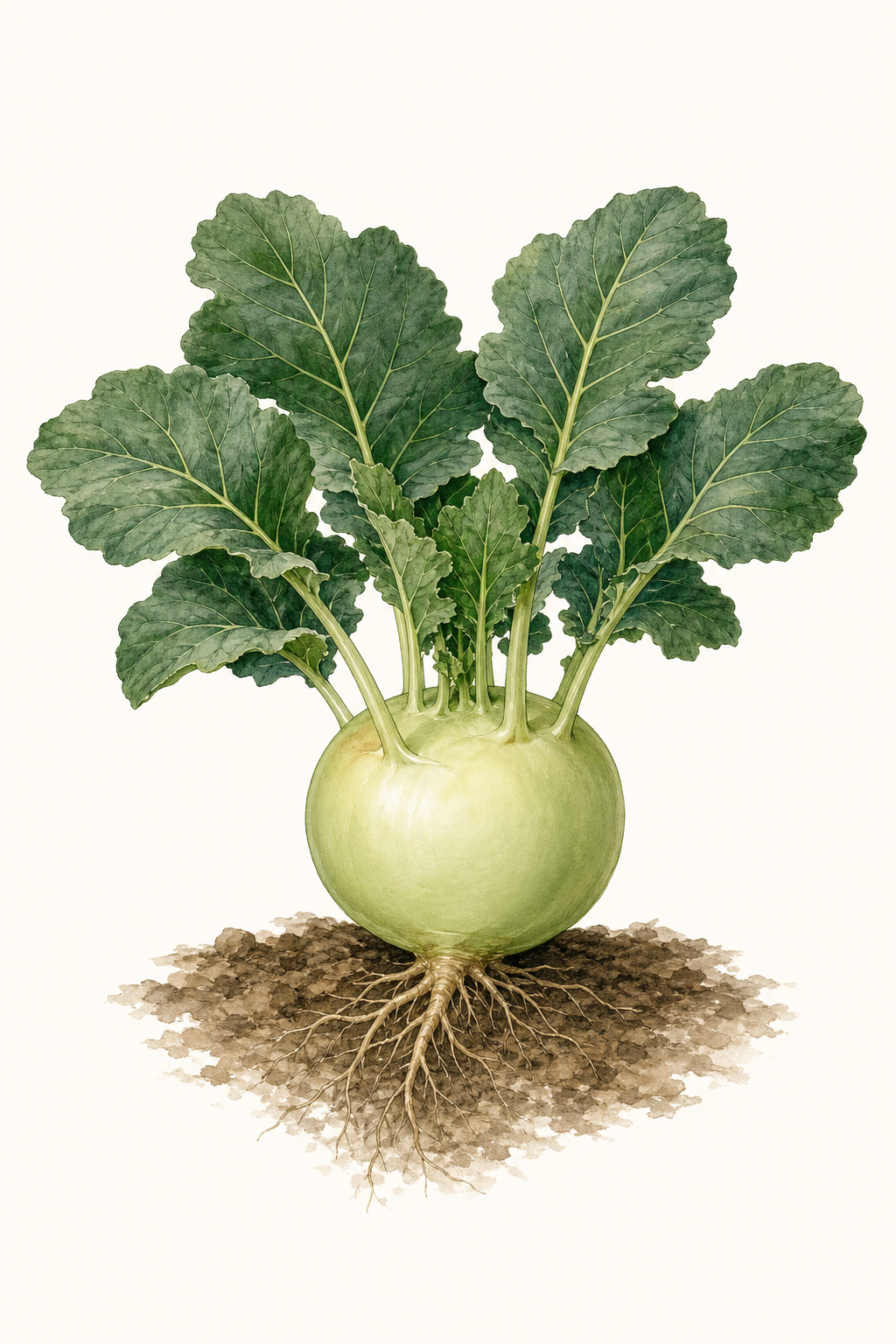
Tender, sweet-snap Kossak kohlrabi forms a smooth, globe-like bulb that rises boldly above the soil—its skin a clean, luminous pa…
Crop Dates
| Milestone | Date |
|---|---|
| Start Indoors | Apr 17th |
| Last Frost | May 15th |
| Transplant / Sow Outdoors | May 15th |
| Harvest Begins | Jul 29th |
| Harvest Ends | Sep 1st |
Crop Details
| Trait | Value |
|---|---|
| Days to Maturity | 75 |
| Sun Requirements | Full Sun |
| Growth Habit | Rosette |
| Support Needed | None |
| Planting Depth | Normal |
| Germination Temp (°F) | 45 |
| Min Soil Temp (°F) | 40 |
| Min Night Temp (°F) | 30 |
| Harden Off (days) | 6 |
Recommended Companions
Frequently Asked Questions
What pest or disease commonly affects kohlrabi (Brassica oleracea var. gongylodes), and how can I manage it at home?
How often should I water kohlrabi during the main growing phase?
How do I tell when kohlrabi is ready to harvest (75 days)?
Tender, sweet-snap Kossak kohlrabi forms a smooth, globe-like bulb that rises boldly above the soil—its skin a clean, luminous pale green with a faint blush where light kisses it. The flesh is crisp and juicy, with a fine, succulent texture that stays pleasantly mild even as it nears maturity. Grow Kossak for fresh salads, quick roasting, and bright slaws, or for creamy sauces that showcase its gentle, cabbage-sweet character.
Sowing Tips

Transplant Conditions
Wait until soil reaches 40°F and nights stay above 30°F before moving outdoors. Harden off for 6 days first.
Expert Note

For best texture, keep consistent moisture and harvest kohlrabi when bulbs are tennis-ball to fist-size—overgrown bulbs can become fibrous even if they stay flavorful.