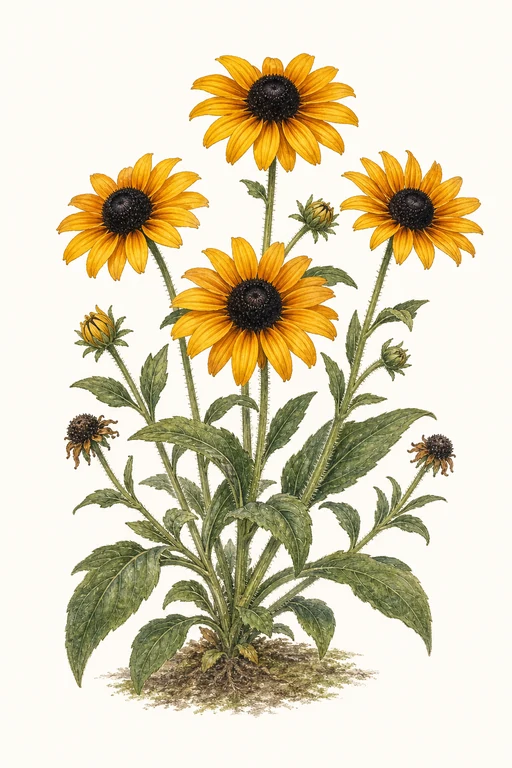
Moreno
90d to harvest
Velvety petals in rich, sun-warmed gold flare outward from a near-black, velvety center—Moreno’s Black-eyed Susan is a bold, high-contrast bloom that seems to glow even on hazy days. The flowers hold a sturdy, slightly tousled texture with a classic daisy silhouette, making them especially striking in mass plantings and long-lasting in the garden. Expect dependable color through the growing season as this biennial-to-perennial performer settles in and returns with confidence year after year.
Crop Dates
| Milestone | Date |
|---|---|
| Start Indoors | Mar 6th |
| Last Frost | May 15th |
| Transplant / Sow Outdoors | May 8th |
| Harvest Begins | Aug 6th |
| Harvest Ends | Sep 1st |
Crop Details
| Trait | Value |
|---|---|
| Days to Maturity | 90 |
| Sun Requirements | Full Sun |
| Growth Habit | Upright |
| Support Needed | None |
| Planting Depth | Normal |
| Germination Temp (°F) | 70 |
| Min Soil Temp (°F) | 45 |
| Min Night Temp (°F) | 35 |
| Harden Off (days) | 7 |
Recommended Companions
Frequently Asked Questions
What’s the most common disease problem for Rudbeckia hirta (black-eyed Susan) and how do I treat it?
Rudbeckia hirta commonly gets powdery mildew in humid, still conditions. Start by improving airflow—space plants about 12–18 inches apart and avoid overhead watering—then spray with an appropriate fungicide labeled for powdery mildew if symptoms spread. Remove and discard heavily infected leaves early so the mildew doesn’t build up across the season.
How can I tell when Rudbeckia hirta is ready to harvest?
Harvest seed when the flower heads turn brown and dry, and the “black-eyed” center has matured into firm seeds that loosen easily when you rub the head. For fresh cut flowers, pick blooms when the ray petals are fully expanded and the central disk is still fairly firm and bright. By around 90 days from sowing under good conditions, plants should be in consistent bloom and seed-head development.